暫
See also: 暂
| ||||||||
Translingual
Han character
暫 (Kangxi radical 72, 日+11, 15 strokes, cangjie input 十中日 (JLA), four-corner 52602, composition ⿱斬日)
References
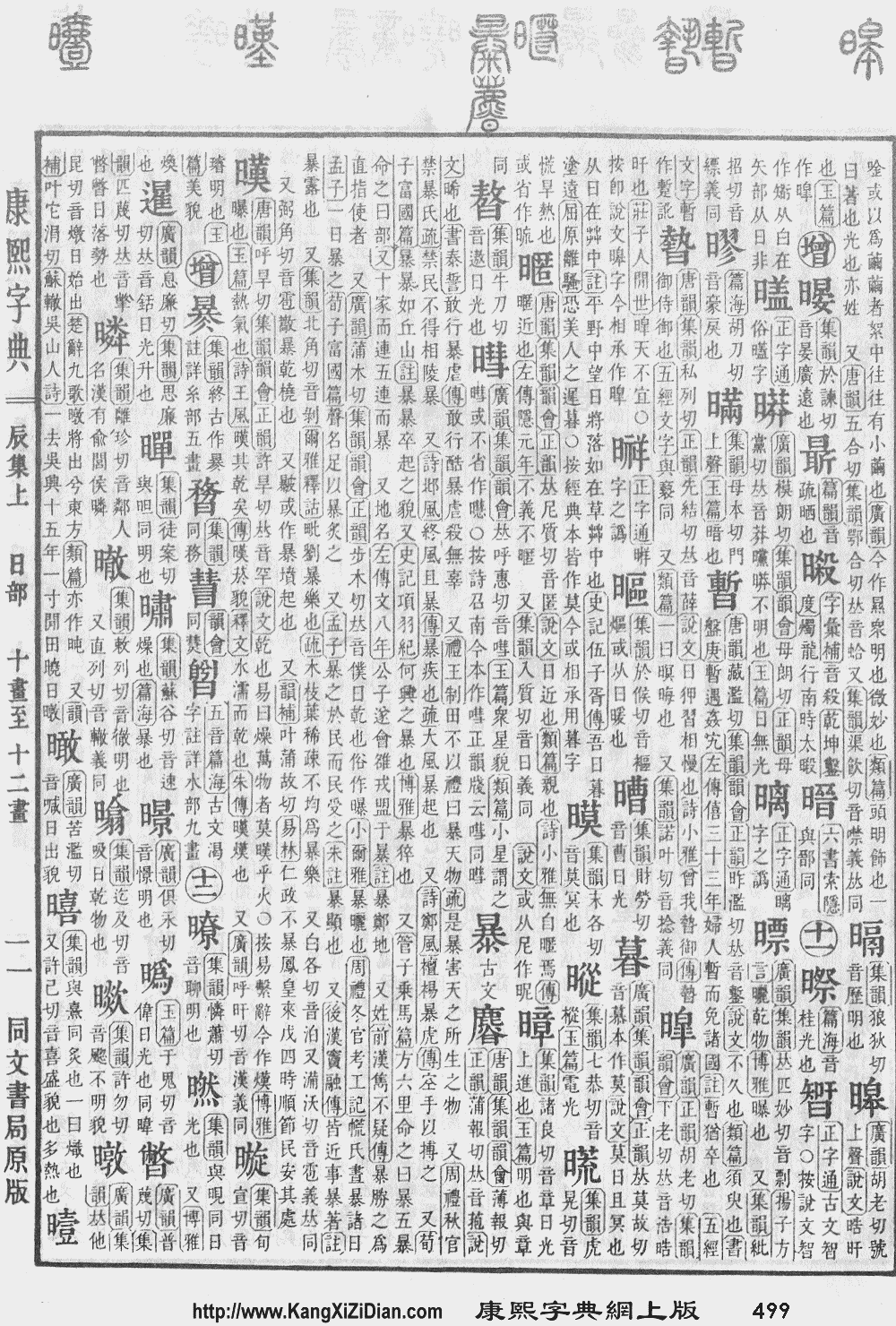
- KangXi: page 499, character 15
- Dai Kanwa Jiten: character 14120
- Dae Jaweon: page 868, character 20
- Hanyu Da Zidian (first edition): volume 2, page 1533, character 3
- Unihan data for U+66AB
Chinese
| trad. | 暫 | |
|---|---|---|
| simp. | 暂 | |
| alternative forms | 蹔/暂 | |
Glyph origin
Characters in the same phonetic series (斬) (Zhengzhang, 2003)
Phono-semantic compound (形聲, OC *zaːms) : phonetic 斬 (OC *ʔsreːmʔ) + semantic 日.
Pronunciation
Japanese
Korean
Etymology
From Middle Chinese 暫 (MC d͡zɑmH).
| Historical Readings | ||
|---|---|---|
| Dongguk Jeongun Reading | ||
| Dongguk Jeongun, 1448 | 짬〮 (Yale: ccám) | |
| Middle Korean | ||
| Text | Eumhun | |
| Gloss (hun) | Reading | |
| Sinjeung Yuhap, 1576 | 잠ᄭᅡᆫ (Yale: cam-s-kan) | 잠 (Yale: cam) |
Pronunciation
- (temporary; etc.):
- (SK Standard/Seoul) IPA(key): [t͡ɕa̠m]
- Phonetic hangul: [잠]
- (in 잠시 (暫時, jamsi, “a moment”)):
- (SK Standard/Seoul) IPA(key): [t͡ɕa̠(ː)m]
- Phonetic hangul: [잠(ː)]
- Though still prescribed in Standard Korean, most speakers in both Koreas no longer distinguish vowel length.
Compounds
Vietnamese
Han character
- This term needs a translation to English. Please help out and add a translation, then remove the text
{{rfdef}}.
Compounds
- tạm biệt [暫別]
This article is issued from Wiktionary. The text is licensed under Creative Commons - Attribution - Sharealike. Additional terms may apply for the media files.