愿
See also: 願
| ||||||||
Translingual
| Stroke order | |||
|---|---|---|---|
 | |||
Han character
愿 (radical 61, 心+10, 14 strokes, cangjie input 一火心 (MFP), four-corner 71339, composition ⿸原心(G) or ⿱原心(HTJKV))
Derived characters
- 𨆸, 𩕮
References
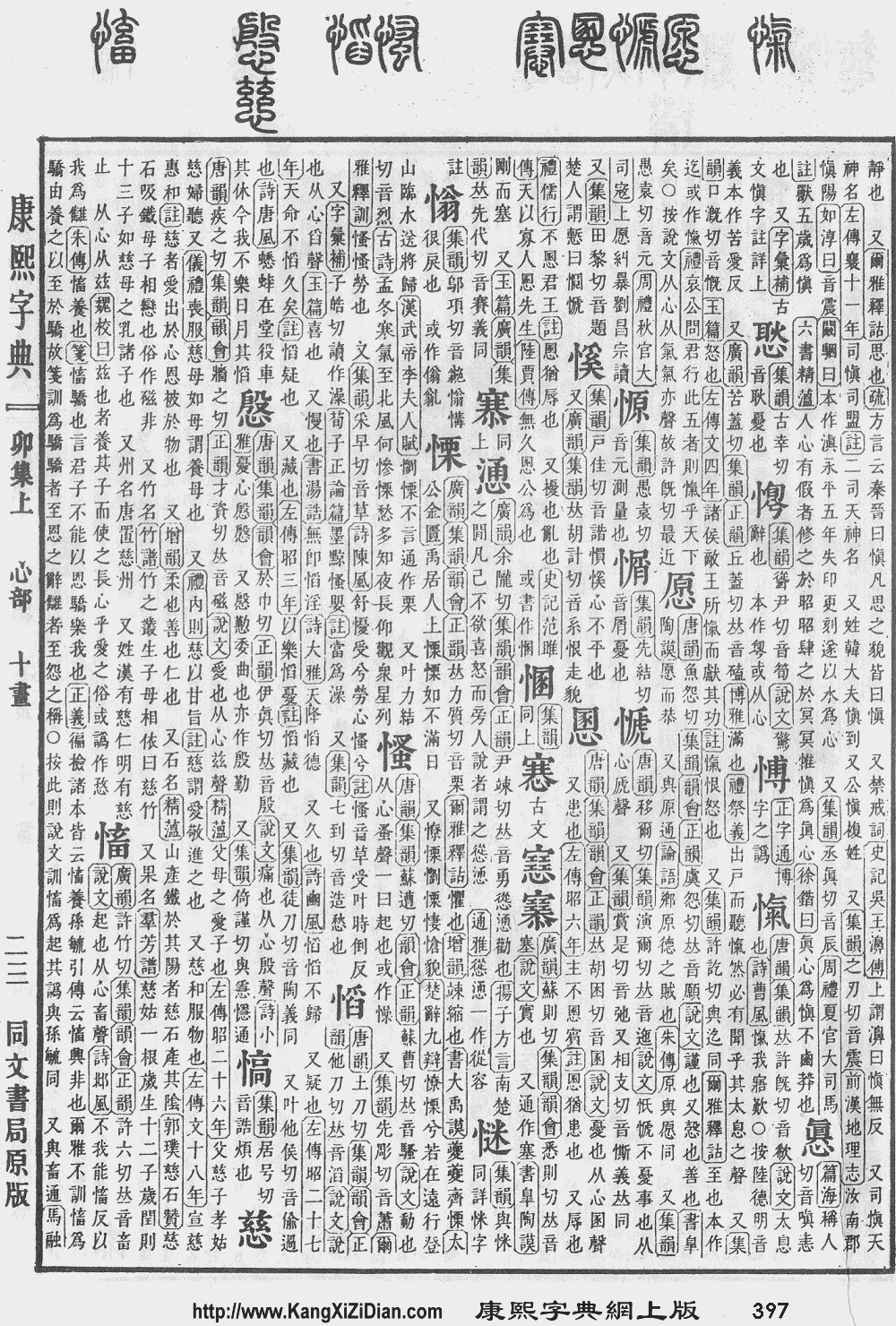
- KangXi: page 397, character 6
- Dai Kanwa Jiten: character 11030
- Dae Jaweon: page 736, character 2
- Hanyu Da Zidian: volume 4, page 2333, character 10
- Unihan data for U+613F
Chinese
Glyph origin
| Characters in the same phonetic series (原) (Zhengzhang, 2003) | |
|---|---|
| Old Chinese | |
| 羱 | *ŋʷaːn, *ŋʷan |
| 豲 | *ɦŋʷaːn |
| 謜 | *sŋ̊ʰʷan, *ŋʷan |
| 縓 | *sŋ̊ʰʷan, *sŋ̊ʰʷans |
| 原 | *ŋʷan |
| 源 | *ŋʷan |
| 厵 | *ŋʷan |
| 嫄 | *ŋʷan |
| 騵 | *ŋʷan |
| 榞 | *ŋʷan |
| 獂 | *ŋʷan |
| 蒝 | *ŋʷan |
| 願 | *ŋʷans |
| 傆 | *ŋʷans |
| 愿 | *ŋʷans |
Phono-semantic compound (形聲, OC *ŋʷans) : phonetic 原 (OC *ŋʷan) + semantic 心 (“heart”).
Etymology 1
| For pronunciation and definitions of 愿 – see 願 (“to desire; to want: to wish; ambition”). (This character, 愿, is the simplified form of 願.) |
Notes:
|
Pronunciation
Japanese
Kanji
愿
- This term needs a translation to English. Please help out and add a translation, then remove the text
{{rfdef}}.
Korean
Hanja
愿 • (won) (hangeul 원, revised won, McCune–Reischauer wŏn, Yale wen)
- This term needs a translation to English. Please help out and add a translation, then remove the text
{{rfdef}}.
This article is issued from Wiktionary. The text is licensed under Creative Commons - Attribution - Sharealike. Additional terms may apply for the media files.