彪
| ||||||||
Translingual
Han character
彪 (radical 59, 彡+8, 11 strokes, cangjie input 卜弓竹竹竹 (YNHHH) or 卜山竹竹竹 (YUHHH), four-corner 22212, composition ⿺虎彡)
References
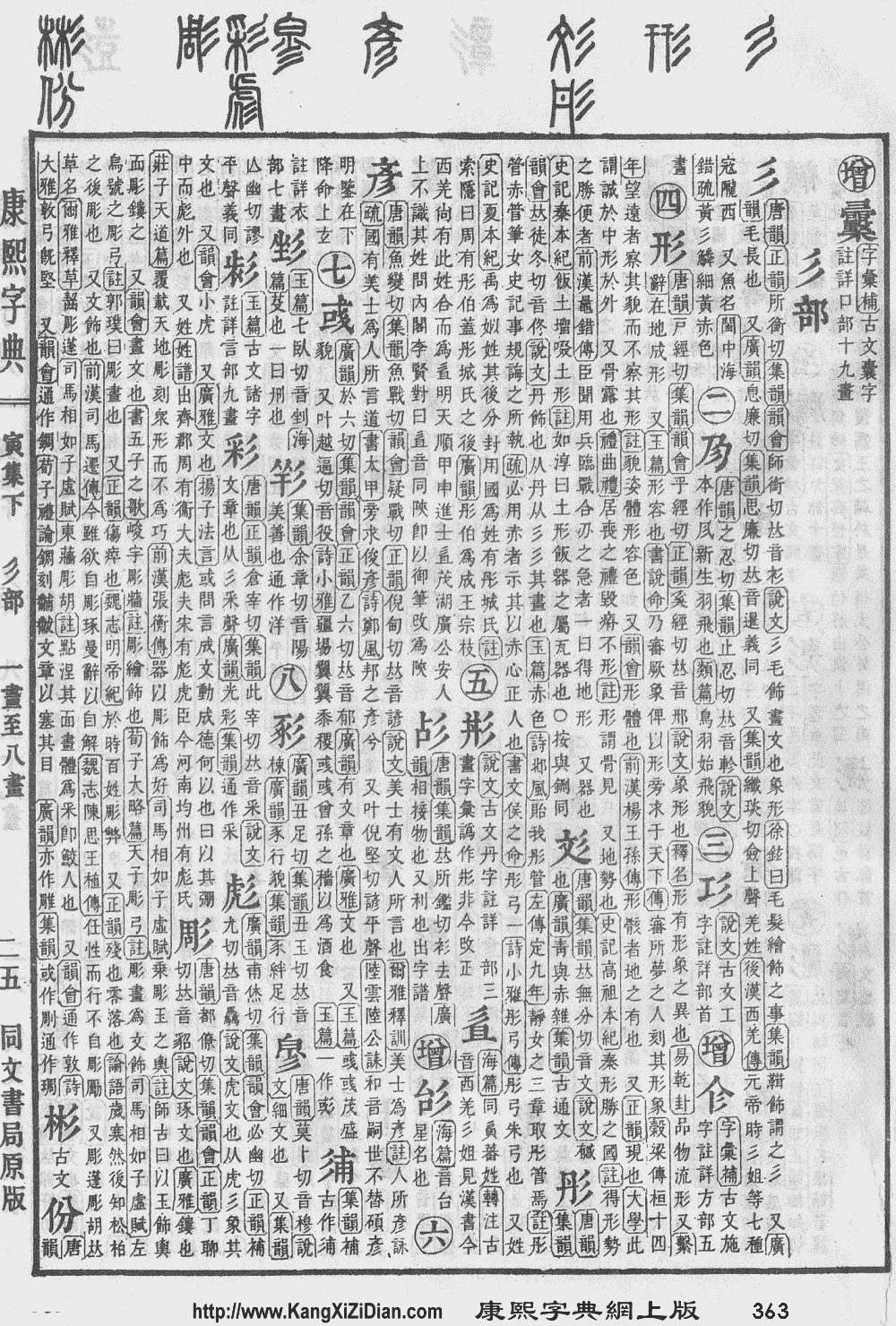
- KangXi: page 363, character 22
- Dai Kanwa Jiten: character 9993
- Dae Jaweon: page 683, character 1
- Hanyu Da Zidian: volume 4, page 2820, character 11
- Unihan data for U+5F6A
Chinese
| simp. and trad. |
彪 | |
|---|---|---|
Glyph origin
| Characters in the same phonetic series (彪) (Zhengzhang, 2003) | |
|---|---|
| Old Chinese | |
| 彪 | *prɯw |
| 淲 | *brɯw |
| 滮 | *brɯw |
Pronunciation
Definitions
彪
Japanese
Kanji
彪
(“Jinmeiyō” kanji used for names)
- This term needs a translation to English. Please help out and add a translation, then remove the text
{{rfdef}}.
Readings
- Go-on: ひゅう (hyū)←ひう (fiu, historical)
- Kan-on: ひゅう (hyū)←ひう (fiu, historical)
- Kan’yō-on: ひょう (hyō)←へう (feu, historical)
- Kun: あや (aya, 彪)
- Nanori: つよし (tsuyoshi); たけき (takeki); かおる (kaoru); あきら (akira); とら (tora); たけし (takeshi)
Korean
Hanja
彪 • (pyo) (hangeul 표, revised pyo, McCune–Reischauer p'yo, Yale phyo)
- This term needs a translation to English. Please help out and add a translation, then remove the text
{{rfdef}}.
Vietnamese
Han character
彪 (bưu)
- This term needs a translation to English. Please help out and add a translation, then remove the text
{{rfdef}}.
This article is issued from Wiktionary. The text is licensed under Creative Commons - Attribution - Sharealike. Additional terms may apply for the media files.