弥
| ||||||||
Translingual
Han character
弥 (radical 57, 弓+5, 8 strokes, cangjie input 弓弓火 (NNF), composition ⿰弓尔)
References
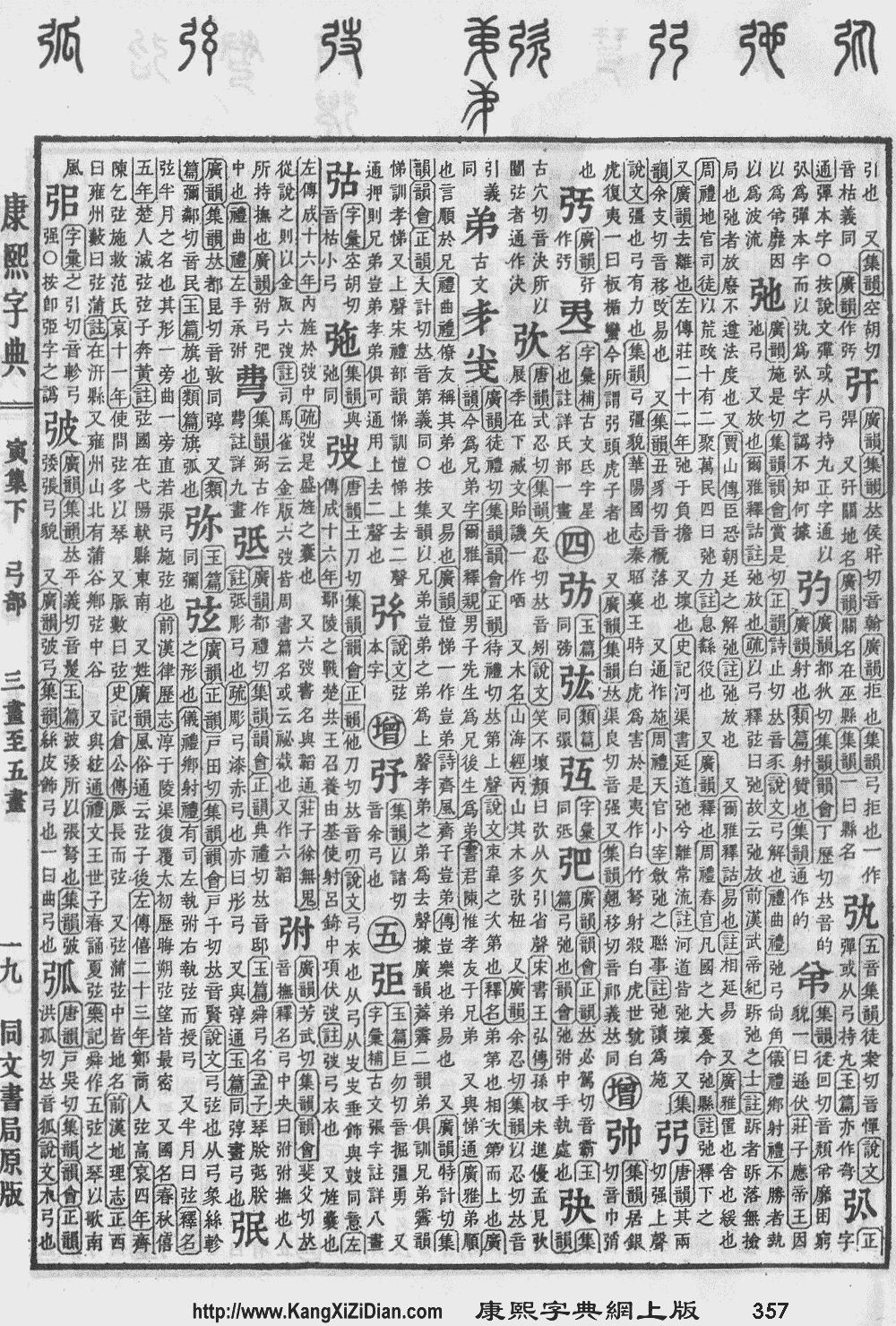
- KangXi: page 357, character 30
- Dai Kanwa Jiten: character 9753
- Dae Jaweon: page 674, character 12
- Hanyu Da Zidian: volume 2, page 993, character 6
- Unihan data for U+5F25
Chinese
Glyph origin
| Characters in the same phonetic series (尔) (Zhengzhang, 2003) | |
|---|---|
| Old Chinese | |
| 妳 | *rneːlʔ |
| 弥 | *mnel |
| 尒 | *njelʔ |
| 尔 | *njelʔ |
| 迩 | *njelʔ |
| 你 | *nɯʔ |
| 苶 | *neːb, *njed, *neːd |
Etymology 1
| For pronunciation and definitions of 弥 – see 彌 (“to relax a bow; to fill; to cover; etc.”). (This character, 弥, is the simplified form of 彌.) |
Notes:
|
Etymology 2
| For pronunciation and definitions of 弥 – see 瀰 (“full; flow”). (This character, 弥, is the simplified form of 瀰.) |
Notes:
|
Japanese
Kanji
弥
(common “Jōyō” kanji, shinjitai kanji, kyūjitai form 彌)
- (端から端に)わたる。Cross (from end to end).
- あまねく universally
- ますます more and more
- 永く a long time
Readings
Korean
Hanja
弥 • (mi) (hangeul 미, revised mi, McCune–Reischauer mi, Yale mi)
- This term needs a translation to English. Please help out and add a translation, then remove the text
{{rfdef}}.
This article is issued from Wiktionary. The text is licensed under Creative Commons - Attribution - Sharealike. Additional terms may apply for the media files.