垝
| ||||||||
Translingual
Han character
垝 (radical 32, 土+6, 9 strokes, cangjie input 土弓一山 (GNMU), four-corner 47112, composition ⿰土危)
References
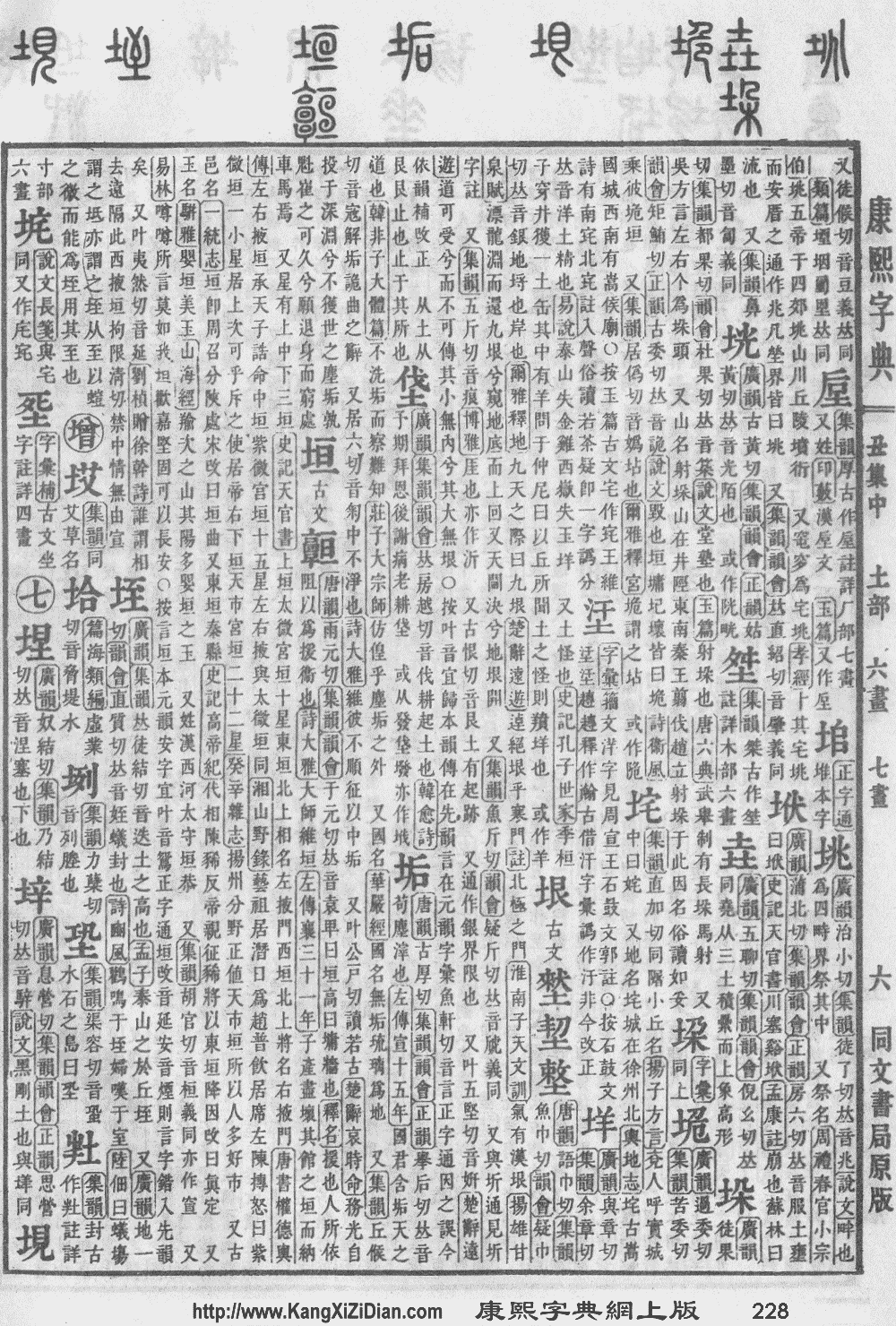
- KangXi: page 228, character 10
- Dai Kanwa Jiten: character 5050
- Dae Jaweon: page 464, character 8
- Hanyu Da Zidian: volume 1, page 441, character 2
- Unihan data for U+579D
Chinese
| simp. and trad. |
垝 | |
|---|---|---|
Glyph origin
| Characters in the same phonetic series (危) (Zhengzhang, 2003) | |
|---|---|
| Old Chinese | |
| 鮠 | *ŋuːl |
| 峞 | *ŋuːl, *ŋuːlʔ |
| 頠 | *ŋuːlʔ, *ŋrolʔ |
| 詭 | *krolʔ |
| 垝 | *krolʔ, *krols |
| 陒 | *krolʔ |
| 觤 | *krolʔ |
| 恑 | *krolʔ |
| 蛫 | *krolʔ |
| 祪 | *krolʔ |
| 洈 | *krolʔ, *ŋrol |
| 姽 | *krolʔ, *ŋrolʔ |
| 桅 | *krolʔ |
| 佹 | *krolʔ |
| 跪 | *kʰrolʔ, *ɡrolʔ |
| 危 | *ŋrol |
| 峗 | *ŋrol |
| 硊 | *ŋrolʔ |
| 卼 | *kʰruls |
Pronunciation
Definitions
垝
- This term needs a translation to English. Please help out and add a translation, then remove the text
{{rfdef}}.
Compounds
|
Japanese
Kanji
垝
- This term needs a translation to English. Please help out and add a translation, then remove the text
{{rfdef}}.
Readings
- Go-on: き (ki)←き (ki, historical)←くゐ (kwi, ancient)
- Kan-on: き (ki)←き (ki, historical)←くゐ (kwi, ancient)
- Kun: やぶれる (yabureru, 垝れる)
This article is issued from Wiktionary. The text is licensed under Creative Commons - Attribution - Sharealike. Additional terms may apply for the media files.