俊
| ||||||||
Translingual
Han character
俊 (Kangxi radical 9, 人+7, 9 strokes, cangjie input 人戈金水 (OICE), four-corner 23247, composition ⿰亻夋)
References
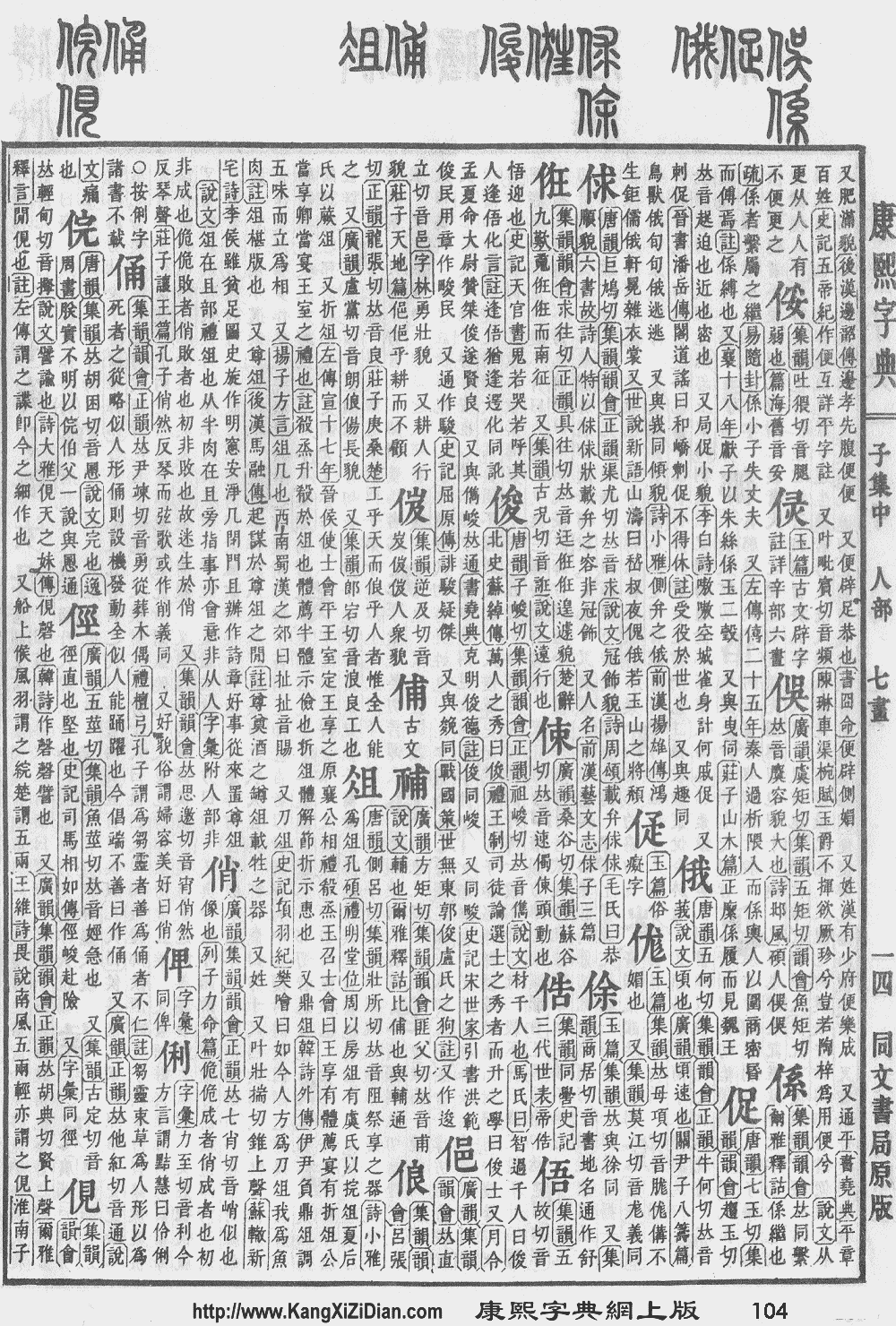
- KangXi: page 104, character 15
- Dai Kanwa Jiten: character 674
- Dae Jaweon: page 220, character 14
- Hanyu Da Zidian (first edition): volume 1, page 168, character 4
- Unihan data for U+4FCA
Chinese
| trad. | 俊 | |
|---|---|---|
| simp. # | 俊 | |
| alternative forms | 儁/俊 㑺/俊 | |
Glyph origin
| Historical forms of the character 俊 | ||||||||
|---|---|---|---|---|---|---|---|---|
| ||||||||
|
References: Mostly from Richard Sears' Chinese Etymology site (authorisation),
|


Characters in the same phonetic series (允) (Zhengzhang, 2003)
| Old Chinese | |
|---|---|
| 唆 | *sloːl |
| 梭 | *sloːl |
| 葰 | *sloːlʔ, *sroːlʔ, *slul |
| 誜 | *sroːls |
| 朘 | *ʔslon |
| 捘 | *ʔsluːls, *ʔsluːns, *sʰlun |
| 荾 | *slul |
| 酸 | *sloːn |
| 狻 | *sloːn |
| 痠 | *sloːn |
| 鋑 | *ʔslon |
| 脧 | *ʔsluːl |
| 悛 | *sʰlon |
| 吮 | *zlonʔ, *ɦljunʔ |
| 萒 | *ɡronʔ, *lonʔ |
| 沇 | *lonʔ |
| 抁 | *lonʔ |
| 馻 | *lonʔ, *lunʔ |
| 兖 | *lonʔ |
| 渷 | *lonʔ |
| 兗 | *lonʔ |
| 焌 | *ʔsluːns, *ʔsluns, *sʰlud |
| 允 | *lunʔ |
| 狁 | *lunʔ |
| 玧 | *lunʔ |
| 俊 | *ʔsluns |
| 晙 | *ʔsluns, *sluns |
| 餕 | *ʔsluns |
| 畯 | *ʔsluns |
| 駿 | *ʔsluns |
| 竣 | *sʰlun |
| 皴 | *sʰlun |
| 逡 | *sʰlun |
| 踆 | *sʰlun |
| 夋 | *sʰlun |
| 埈 | *sluns |
| 陖 | *sluns |
| 鵕 | *sluns |
| 浚 | *sluns |
| 峻 | *sluns |
Pronunciation
Definitions
俊
- person of outstanding talent
- unusually talented
- good-looking; pretty; beautiful; handsome
- a surname: Jun
Synonyms
- (good-looking):
Synonyms of 俊
|
Dialectal synonyms of 漂亮 (“good-looking; beautiful; pretty”) [map]
Compounds
Japanese
Readings
Korean
Etymology
From Middle Chinese 俊 (MC t͡siuɪnH).
| Historical readings |
|---|
|
Pronunciation
- (SK Standard/Seoul) IPA(key): [t͡ɕu(ː)n]
- Phonetic hangul: [준(ː)]
- Though still prescribed in Standard Korean, most speakers in both Koreas no longer distinguish vowel length.
Compounds
Vietnamese
Han character
俊: Hán Việt readings: tuấn (
俊: Nôm readings: tuấn[1][3], toáng[2]
- This term needs a translation to English. Please help out and add a translation, then remove the text
{{rfdef}}.
References
- Nguyễn et al. (2009).
- Trần (2004).
- Taberd & Pigneau de Béhaine (1838).
This article is issued from Wiktionary. The text is licensed under Creative Commons - Attribution - Sharealike. Additional terms may apply for the media files.