侭
See also: 儘
 | ||||||||
Translingual
| Traditional | 儘 |
|---|---|
| Shinjitai (extended) |
侭 |
| Simplified | 尽 |
Han character
侭 (Kangxi radical 9, 人+6, 8 strokes, cangjie input 人尸人卜 (OSOY), composition ⿰亻尽)
References
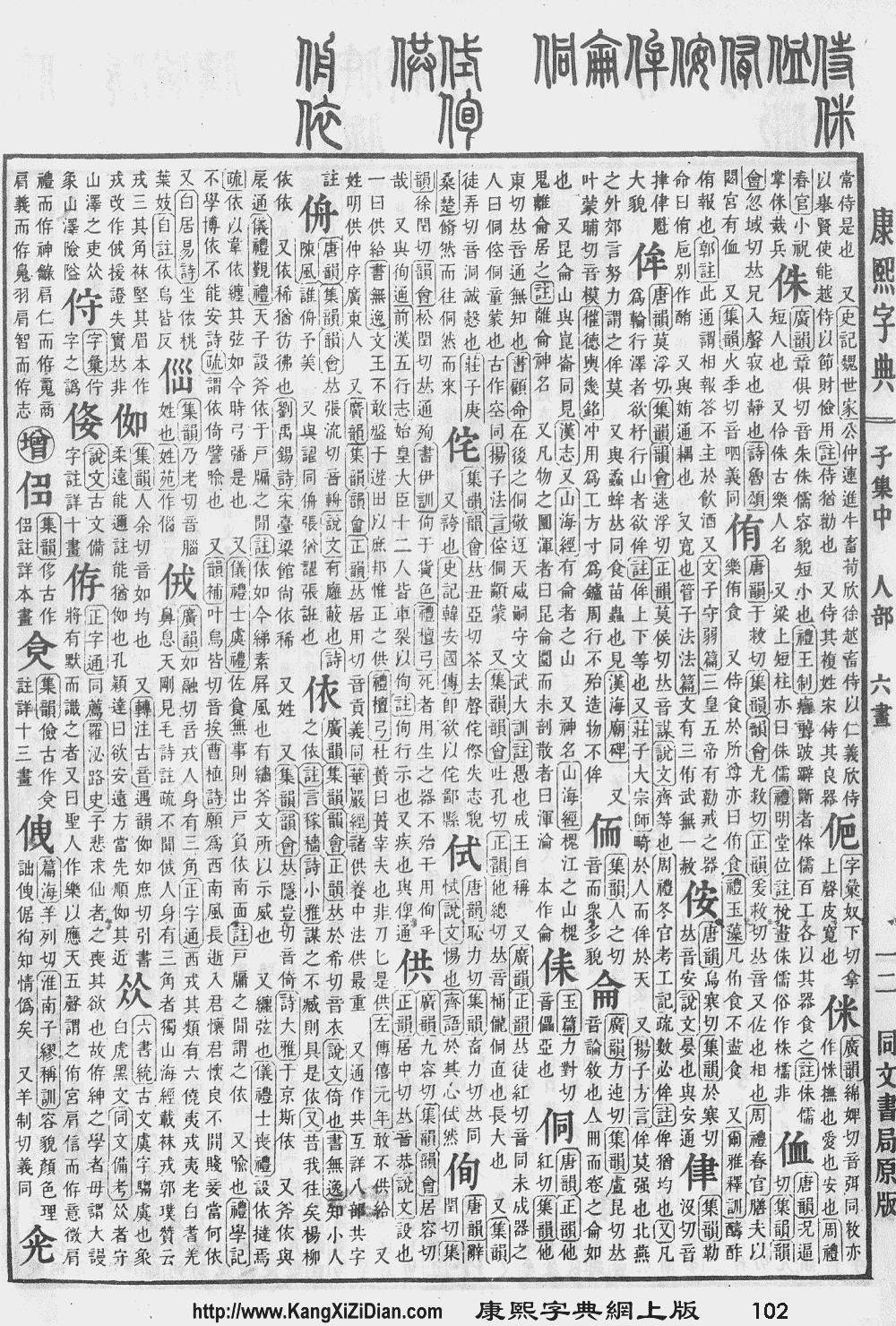
- KangXi: not present, would follow page 102, character 29
- Hanyu Da Zidian (first edition): not present, would follow volume 1, page 154, character 8
- Unihan data for U+4FAD
Chinese
Definitions
| For pronunciation and definitions of 侭 – see 儘 (“utmost; extreme; furthest; to do one's utmost; to do all one can; to do one's best; etc.”). (This character, 侭, is the former (1935–1936) ROC simplified and draft (1955) first-round simplified form of 儘.) |
Notes:
|
Japanese
| 侭 | |
| 儘 |
Etymology 1
| Kanji in this term |
|---|
| 侭 |
| まま Hyōgaiji |
| kun’yomi |
| Alternative spelling |
|---|
| 儘 (kyūjitai) |
| For pronunciation and definitions of 侭 – see the following entry. | ||
| ||
| (This term, 侭, is an alternative spelling of the above term.) |
Etymology 2
| Kanji in this term |
|---|
| 侭 |
| まんま Hyōgaiji |
| kun’yomi |
| Alternative spelling |
|---|
| 儘 (kyūjitai) |
| For pronunciation and definitions of 侭 – see the following entry. | ||
| ||
| (This term, 侭, is an alternative spelling of the above term.) |
This article is issued from Wiktionary. The text is licensed under Creative Commons - Attribution - Sharealike. Additional terms may apply for the media files.