Portal:Law

The Law Portal

Lady Justice, often used as a personification of the law, holding a sword in one hand and scales in the other.

Law is a set of rules that are created and are enforceable by social or governmental institutions to regulate behavior, with its precise definition a matter of longstanding debate. It has been variously described as a science and as the art of justice. State-enforced laws can be made by a group legislature or by a single legislator, resulting in statutes; by the executive through decrees and regulations; or established by judges through precedent, usually in common law jurisdictions. Private individuals may create legally binding contracts, including arbitration agreements that adopt alternative ways of resolving disputes to standard court litigation. The creation of laws themselves may be influenced by a constitution, written or tacit, and the rights encoded therein. The law shapes politics, economics, history and society in various ways and also serves as a mediator of relations between people.

Legal systems vary between jurisdictions, with their differences analysed in comparative law. In civil law jurisdictions, a legislature or other central body codifies and consolidates the law. In common law systems, judges may make binding case law through precedent, although on occasion this may be overturned by a higher court or the legislature. Historically, religious law has influenced secular matters and is, as of the 21st century, still in use in some religious communities. Sharia law based on Islamic principles is used as the primary legal system in several countries, including Iran and Saudi Arabia.

The scope of law can be divided into two domains. Public law concerns government and society, including constitutional law, administrative law, and criminal law. Private law deals with legal disputes between individuals and/or organisations in areas such as contracts, property, torts/delicts and commercial law. This distinction is stronger in civil law countries, particularly those with a separate system of administrative courts; by contrast, the public-private law divide is less pronounced in common law jurisdictions. (Full article...)

Selected article

In English law, secret trusts are a class of trust defined as an arrangement between a testator and a trustee, made to come into force after death, that aims to benefit a person without having been written in a formal will. The property is given to the trustee in the will, and he would then be expected to pass it on to the real beneficiary. For these to be valid, the person seeking to enforce the trust must prove that the testator intended to form a trust, that this intention was communicated to the trustee, and that the trustee accepted his office. There are two types of secret trust — fully secret and half-secret. A fully secret trust is one with no mention in the will whatsoever. In the case of a half-secret trust, the face of the will names the trustee as trustee, but does not give the trust's terms, including the beneficiary. The most important difference lies in communication of the trust: the terms of a half-secret trust must be communicated to the trustee before the execution of the will, whereas in the case of a fully secret trust the terms may be communicated after the execution of the will, as long as this is before the testator's death.

Secret trusts do not comply with the formality requirements (such as witnessing) laid down in the Wills Act 1837. Despite this, the courts have chosen to uphold them as valid. Although various justifications have been given for this, they are generally categorised as either based on preventing fraud, or as regarding secret trusts as outside (dehors) the operation of the Wills Act. The first is considered the traditional approach if the courts do not recognise secret trusts, the trustee given the property in the will would be able to keep it for himself, committing fraud. The fraud theory utilises the equitable maxim that "equity will not allow a statute to be used as a cloak for fraud". A more modern view is that secret trusts exist outside the will altogether, and thus do not have to comply with it. Accepting this theory would undermine the operation of the Wills Act, since the Wills Act is designed to cover all testamentary dispositions. To avoid this problem, one approach has been to reclassify the secret trust as inter vivos ("between the living") but this creates other problems. There have also been attempts to conclude that half-secret trusts rest on a different basis to fully secret trusts, although this has been disapproved by the House of Lords, primarily on practical grounds. (Full article...)

Selected biography

Choor Singh Sidhu (19 January 1911 – 31 March 2009), known professionally as Choor Singh, was a Singaporean lawyer who served as a judge of the Supreme Court of Singapore and, particularly after his retirement from the bench, a philanthropist and writer of books about Sikhism. Born to a family of modest means in Punjab, India, he came to Singapore at four years of age. He completed his secondary education in the top class at Raffles Institution in 1929, then worked as a clerk in a law firm before becoming a civil servant in the Official Assignee's office.

Encouraged by the Assistant Official Assignee, James Walter Davy Ambrose (who was later appointed a High Court Judge), to study law, Choor Singh enrolled as an external student at the University of London, passing the matriculation examination and intermediate LL.B. examination. In 1948 he was appointed a coroner, and the following year was elevated to the post of magistrate, becoming the first Indian to hold such a position in colonial Malaya. Following law studies at Gray's Inn on a government scholarship, he became a Barrister-at-Law in 1955. He was appointed a district judge in 1960 and a judge of the Supreme Court in 1963. Especially noted for his criminal judgments, Singh was the first Singapore judge to impose the death penalty on a woman. (Full article...)

Selected statute

A statute is a formal written enactment of a legislative authority that governs the legal entities of a city, state, or country by way of consent. Typically, statutes command or prohibit something, or declare policy. Statutes are rules made by legislative bodies; they are distinguished from case law or precedent, which is decided by courts, and regulations issued by government agencies. (Full article...)


The Defective Premises Act 1972 (c. 35) is an Act of the Parliament of the United Kingdom that covers landlords' and builders' liability for poorly constructed and poorly maintained buildings, along with any injuries that may result. During the 19th century, the common law principle that a landlord could not be liable for letting a poorly maintained house was established, while a long-running principle was that, in practice, builders could not be sued for constructing defective buildings. The courts began to turn against the first principle during the 20th century, imposing several restrictions on the landlord's immunity, but the landlord was still largely free from being sued.

The Defective Premises Bill was introduced to the House of Commons as a private member's bill by Ivor Richard on 1 December 1971, and given the Royal Assent on 29 June 1972, coming into force as the Defective Premises Act 1972 on 1 January 1974. The Act establishes a duty of care builders and their sub-contractors owe to the occupiers of property they construct or modify, and also establishes a duty of care landlords hold towards their tenants and any third parties who might be injured by their failure to maintain or repair property. The Act received a mixed reaction from critics; while some complimented it on its simple nature compared to the previously complex common rule laws, others felt that it was too limited for what was desired to be achieved, and that the wording used was at times both too vague and too specific. (Full article...)

Did you know...

Image of a courthouse.

  • ... that English gynaecologist Margaret Puxon, who started studying law to prevent boredom while on maternity leave, eventually became a barrister?

Selected images

Selected case

Case law, also used interchangeably with common law, is law that is based on precedents, that is the judicial decisions from previous cases, rather than law based on constitutions, statutes, or regulations. Case law uses the detailed facts of a legal case that have been resolved by courts or similar tribunals. These past decisions are called "case law", or precedent. Stare decisis—a Latin phrase meaning "let the decision stand"—is the principle by which judges are bound to such past decisions, drawing on established judicial authority to formulate their positions. (Full article...)


Gyles v Wilcox (1740) 26 ER 489 was a decision of the Court of Chancery of England that established the doctrine of fair abridgement, which would later evolve into the concept of fair use. The case was heard and the opinion written by Philip Yorke, 1st Earl of Hardwicke, and concerned Fletcher Gyles, a bookseller who had published a copy of Matthew Hale's Pleas of the Crown. Soon after the initial publication, the publishers Wilcox and Nutt hired a writer named Barrow to abridge the book, and repackaged it as Modern Crown Law. Gyles sued for a stay on the book's publishing, claiming his rights under the Statute of Anne had been infringed.

The main issues in the case were whether or not abridgements of a work inherently constituted copyright infringement, or whether they could qualify as a separate, new work. Lord Hartwicke ruled that abridgements fell under two categories: "true abridgements" and "coloured shortenings". True abridgements presented a true effort on the part of the editor, and by this effort, constituted a new work which did not infringe upon the copyright of the original. Leaving it to literary and legal experts to decide, Hartwicke ruled that Modern Crown Law was not a true abridgement, but merely a duplication intending to circumvent the law. (Full article...)

More Did you know (auto-generated)

Wikinews Crime and law portal
Read and edit Wikinews

General images

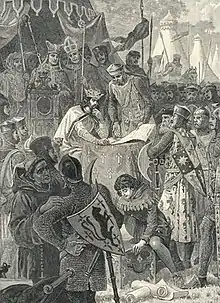
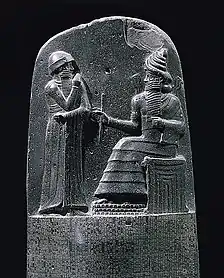
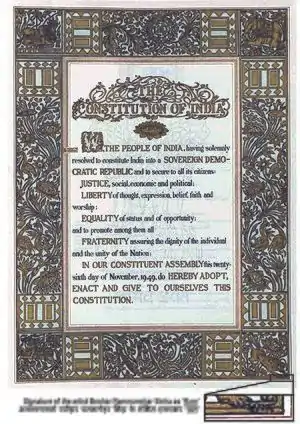
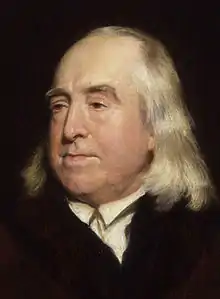
The following are images from various law-related articles on Wikipedia.

Topics

Quality content

Extended content
Featured articles
Featured lists
Did you know? articles
Featured portals
In the News articles
Main page featured articles
Main page featured lists
Good articles

For a list of good articles on legal topics, see here.

Subcategories

Law
Law by forum
Law by issue
Law by region
Law by time
Law by type
Law-related lists
Outlines of laws and legal topics
Acts related to organized crime
Case law
Comparative law
Law-related events
Feminism and law
Glossaries of law
Government commissions
Judicial cooperation
Jurisprudence
Legal aspects of death
Legal awards
Legal communication
Legal disputes
Legal education
Legal events
Legal interpretation
Legal organizations
Legal research
Legal systems
Legal terminology
Masks in law
Memory laws
People by legal status
Philosophy of law
Practice of law
Private law
Promulgation
Religion and law
Rights
Science and law
Set index articles on law
Sociology of law
Sources of law
Standardized tests for Law
Tattooing and law
Works about law
Law stubs

WikiProjects

Related WikiProjects
  • WikiProject Law
  • WikiProject Australian law
  • WikiProject Canadian law
  • Canon law Task Force
  • WikiProject Correction and Detention Facilities
  • WikiProject Crime and Criminal Biography
  • WikiProject FBI
  • WikiProject Human rights
  • WikiProject International law
  • WikiProject Law Enforcement
  • WikiProject Taxation
  • WikiProject U.S. Supreme Court cases
  • WikiProject U.S. courts and judges

What are WikiProjects?

Things you can do...

  • Help out with the WikiProject Law's list of tasks
  • Expand a stub article about law
  • Write a new article about a legal topic, case or person – see the list of requested law articles

Associated Wikimedia

The following Wikimedia Foundation sister projects provide more on this subject:

Discover Wikipedia using portals
This article is issued from Wikipedia. The text is licensed under Creative Commons - Attribution - Sharealike. Additional terms may apply for the media files.