Portal:Drink

The Drink Portal
A portal dedicated to all beverages
Introduction

A drink or beverage is a liquid intended for human consumption. In addition to their basic function of satisfying thirst, drinks play important roles in human culture. Common types of drinks include plain drinking water, milk, juice, smoothies and soft drinks. Traditionally warm beverages include coffee, tea, and hot chocolate. Caffeinated drinks that contain the stimulant caffeine have a long history.
In addition, alcoholic drinks such as wine, beer, and liquor, which contain the drug ethanol, have been part of human culture for more than 8,000 years. Non-alcoholic drinks often signify drinks that would normally contain alcohol, such as beer, wine and cocktails, but are made with a sufficiently low concentration of alcohol by volume. The category includes drinks that have undergone an alcohol removal process such as non-alcoholic beers and de-alcoholized wines. (Full article...)
Selected article -

Kombucha is thought to have originated in China, where the drink is traditional. By the early 20th century it had spread to Russia, then other parts of Eastern Europe and Germany. Kombucha is now homebrewed globally, and also bottled and sold commercially. The global kombucha market was worth approximately US$1.7 billion as of 2019.
Kombucha is produced by symbiotic fermentation of sugared tea using a symbiotic culture of bacteria and yeast (SCOBY) commonly called a "mother" or "mushroom". The microbial populations in a SCOBY vary. The yeast component generally includes Saccharomyces cerevisiae, along with other species; the bacterial component almost always includes Gluconacetobacter xylinus to oxidize yeast-produced alcohols to acetic acid (and other acids). Although the SCOBY is commonly called "tea fungus" or "mushroom", it is actually "a symbiotic growth of acetic acid bacteria and osmophilic yeast species in a zoogleal mat [biofilm]". The living bacteria are said to be probiotic, one of the reasons for the popularity of the drink. (Full article...)
Did you know? -
- ... that after drinking five glasses of "purging" mineral water from the Physic Well on Barnet Common, Samuel Pepys had to break his journey back to London seven or eight times to relieve himself?
- ... that the Buddha is said to have sat under a charoli tree at Bodh Gaya for seven days without eating, drinking, washing, excreting, or lying down?
- ... that the Duke of Sussex has been providing drinks in Acton Green for over a century?
- ... that Phil Elverum recorded Don't Wake Me Up nocturnally, while "drinking pots of black tea all night"?
- ... that a saying in Britain states that one should "never drink in a flat-roofed pub"?
- ... that in 1776 Abraham Hunt entertained Hessian mercenaries with food and drink to render them incapable for duty the night before George Washington defeated them at Trenton?
General images -
 Classical Chinese tea set and three gaiwan (from List of national drinks)
 Palm wine is collected, fermented and stored in calabashes in Bandundu Province, Democratic Republic of the Congo. (from List of alcoholic drinks)
 Bosnian Coffee accessory manufacturers' small shops in Baščaršija - drink is important part of country's culture, and was major part of its economy in the past. (from List of national drinks)
 Mate, a traditional beverage in southern South America, especially in Argentina, Paraguay, and Uruguay (from List of national drinks)
.jpg.webp) Founders Old Curmudgeon old ale (from List of alcoholic drinks)
Founders Old Curmudgeon old ale (from List of alcoholic drinks) The new Seven Color Tea, a recent competitor for national drink of Bangladesh. (from List of national drinks)
 A reservoir glass filled with a naturally colored verte absinthe, next to an absinthe spoon (from List of alcoholic drinks)
 A typical informal faikava in Tonga with the touʻa serving the men. (from List of national drinks)
.JPG.webp) Bottled beer (from List of drinks)
Bottled beer (from List of drinks) Various views of a bottle of mezcal. The "worm", which is actually the larval form of the moth Hypopta agavis that lives on the agave plant, can be seen in the middle image, at the bottom of the bottle. (from List of alcoholic drinks)
 Peach kompot, traditional to several countries in Eastern and Southeastern Europe. (from List of national drinks)
 Clear vodka served with pickled cucumber – the usual way of consuming it in Slavic countries of the so-called "vodka belt". (from List of national drinks)
.jpg.webp)
 Indian Masala chai served in a red clay tea cup. (from List of national drinks)
 Many in both Peru and Chile think that pisco sour is their national drink. (from List of national drinks)
 A Glencairn whisky glass. (from List of national drinks)
 Kaapi, Indian filter coffee. (from List of national drinks)
 Thai iced tea is a popular drink in Thailand and in many parts of the world. (from List of national drinks)
 Red wine is popular in many European countries, notably France and Italy. (from List of national drinks)
 Mixed drinks: a non-alcoholic Shirley Temple (left) and alcoholic Cosmopolitan (right) (from List of drinks)
 A hard cider produced in Michigan, U.S. (from List of alcoholic drinks)
 The 7-layered tea of Bangladesh. (from List of national drinks)
 Cider (from List of drinks)
 A fully supplied bar with various types of drinks (from List of alcoholic drinks)
 Caipirinha is the national drink of Brazil and is made from cachaça, lime, and sugar. (from List of national drinks)
 Ice milk and lemon tea (from List of drinks)
.jpg.webp) Various distilled drinks (from List of drinks)
Various distilled drinks (from List of drinks)
 2004 data of alcohol consumption per capita (age 15 or older), per year, by country, in liters of pure alcohol. (from List of drinks)
 Singapore Sling (from List of national drinks)
.jpg.webp) Bottles of Zhuyeqing (Chu Yeh Ching) baijiu produced in Shanxi, China (from List of national drinks)
Bottles of Zhuyeqing (Chu Yeh Ching) baijiu produced in Shanxi, China (from List of national drinks)
 A kvass street vendor in Belgorod, Russia, 2013 (from List of national drinks)

.jpg.webp)
 Lemon, lime and bitters is commonly consumed in Australia and New Zealand. (from List of national drinks)
 Desi daru from India (from List of alcoholic drinks)
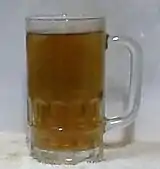 A glass mug of mugicha, a type of roasted barley tea (from List of drinks)
 Various bottles and containers of Russian vodka (from List of alcoholic drinks)
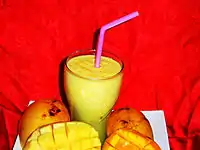
 Characteristics of boba tea (also known as "bubble tea" or "pearl milk tea") -- the national drink of Taiwan -- are the tapioca balls that rest at the bottom of the beverage that are drunk with a wide straw. (from List of national drinks)
 A display of spirits in a supermarket (from List of drinks)
Selected image -

Selected biography -
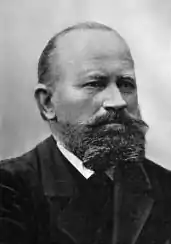
Amund Ringnes (7 October 1840 – 13 January 1907) was a Norwegian businessman, brewery owner and patron.
He was born in Krødsherad, Buskerud, the son of Anders Knudsen Ringnes (1813–75), farmer, and his wife Maren Amundsdatter (1815–76). He grew up at the Ringnes farm, and commenced working at Akers Mekaniske Verksted in 1860. He left Akers Mek. Verksted in 1865, and was employed by the brewery Christiania Bryggeri. In 1876, he founded Ringnes & Compani brewery with his brother Ellef Ringnes and the businessman Axel Heiberg. It was the eighth brewery in Christiania (now Oslo), and later had its name changed to Ringnes Bryggeri. (Full article...)Selected quote -
| “ | I want one bourbon, one scotch and one beer
One bourbon, one scotch, one beer. |
” |
| — John Lee Hooker George Thorogood & The Destroyers (1977) |
Selected ingredient -

Topics
| General topics: | Bartending • Bottling • Drinking • Drinking water • Bottled water • Mineral water • Coffee • Energy drink • Juice • Tea • Milk • Plant milk • Pasteurization • Refrigeration • Steeping • Water purification |
| Alcoholic beverages: | Beer • Brandy • Brewing • Caffeinated alcoholic drinks • Cider • Cocktails • Distillation • Fermentation • Hard soda • Liquor • Liqueur • Malt drink • Mead • Proof • Rice Wine • Schnapps • Vodka • Whiskey • Wine |
| Soft Drinks: | Carbonation • Cola • Orange soft drink • Frozen carbonated drink • Root beer • Soda water • Lithia water • |
| Miscellaneous: | Drink industry • Lemonade • Limeade • Orange drink • Slush (beverage) |
List articles

| Drinks |
| ||
|---|---|---|---|
| Alcoholic drinks |
| ||
| Caffeinated drinks | |||
| Polysubstance combinations | |||
| By country | |||
| |||


More drink list articles
Subcategories

Related portals
WikiProjects
.svg.png.webp)

WikiProject Food & Drink is an association of Wikipedians with an interest in culinary-related subjects. They have come together to co-ordinate the development of food and drink articles here on Wikipedia as well as the many subjects related to food such as foodservice, catering and restaurants. If you wish to learn more about these subjects as well as get involved, please visit the project.
.svg.png.webp) WikiProject Beer – covers Wikipedia's coverage of beer and breweries and microbreweries
WikiProject Beer – covers Wikipedia's coverage of beer and breweries and microbreweries
.svg.png.webp) WikiProject Wine – aims to compile thorough and accurate information on different vineyards, wineries and varieties of wines, including but not limited to their qualities, origins, and uses.
WikiProject Wine – aims to compile thorough and accurate information on different vineyards, wineries and varieties of wines, including but not limited to their qualities, origins, and uses.
| Child projects: | Task forces: (All inactive) |
|
|
| Related projects: | |
| |
Things you can do
 |
Here are some tasks awaiting attention:
|
Associated Wikimedia
The following Wikimedia Foundation sister projects provide more on this subject:
-
 Commons
Free media repository -
 Wikibooks
Free textbooks and manuals -
 Wikidata
Free knowledge base -
 Wikinews
Free-content news -
 Wikiquote
Collection of quotations -
 Wikisource
Free-content library -
 Wikiversity
Free learning tools -
 Wiktionary
Dictionary and thesaurus
More portals
-
 List of all portalsList of all portals
 -
 The arts portal
 -
 Biography portal
 -
 Current events portal
 -
 Geography portal
 -
 History portal
 -
 Mathematics portal
 -
 Science portal
 -
 Society portal
 -
 Technology portal
 -
 Random portalRandom portal
 -
 WikiProject PortalsWikiProject Portals