Portal:Capitalism
The Capitalism PortalCapitalism is an economic system based on the private ownership of the means of production and their operation for profit. Central characteristics of capitalism include capital accumulation, competitive markets, price system, private property, property rights recognition, voluntary exchange, and wage labor. In a market economy, decision-making and investments are determined by owners of wealth, property, or ability to maneuver capital or production ability in capital and financial markets—whereas prices and the distribution of goods and services are mainly determined by competition in goods and services markets. Economists, historians, political economists and sociologists have adopted different perspectives in their analyses of capitalism and have recognized various forms of it in practice. These include laissez-faire or free-market capitalism, anarcho-capitalism, state capitalism and welfare capitalism. Different forms of capitalism feature varying degrees of free markets, public ownership, obstacles to free competition and state-sanctioned social policies. The degree of competition in markets and the role of intervention and regulation as well as the scope of state ownership vary across different models of capitalism. The extent to which different markets are free and the rules defining private property are matters of politics and policy. Most of the existing capitalist economies are mixed economies that combine elements of free markets with state intervention and in some cases economic planning. Market economies have existed under many forms of government and in many different times, places and cultures. Modern capitalist societies developed in Western Europe in a process that led to the Industrial Revolution. Capitalist systems with varying degrees of direct government intervention have since become dominant in the Western world and continue to spread. Economic growth is a characteristic tendency of capitalist economies. (Full article...) Selected article Selected biographyChester Irving Barnard (November 7, 1886 – June 7, 1961) was an American business executive, public administrator, and the author of pioneering work in management theory and organizational studies. His landmark 1938 book, The Functions of the Executive, sets out a theory of organization and of the functions of executives in organizations. The book has been widely assigned in university courses in management theory and organizational sociology. Barnard viewed organizations as systems of cooperation of human activity, and noted that they are typically short-lived. According to Barnard, organizations are generally not long-lived because they do not meet the two criteria necessary for survival: effectiveness and efficiency. (Full article...) Selected quote
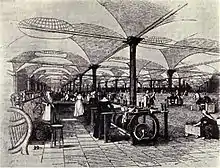
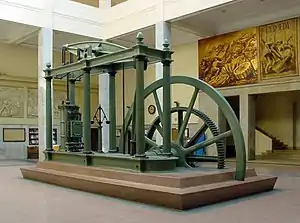
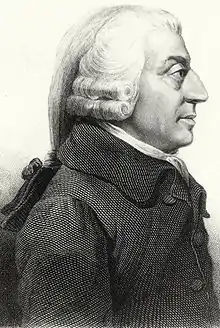
General imagesThe following are images from various capitalism-related articles on Wikipedia.
Did you know
Categories Category puzzle Capitalism Capital (economics) Capitalist systems Criticism of capitalism Ideologies of capitalism Soviet Union–United States relations Works about capitalism Related portalsCapitalism topicsCapitalism .. Private property .. Capitalist mode of production .. Laissez-faire .. Ludwig Von Mises .. Murray N. Rothbard .. Economic freedom .. Adam Smith .. Money .. Ronald Reagan .. American capitalism .. Criticisms of socialism .. Patent .. The Wealth of Nations .. Corporate capitalism .. Democratic capitalism .. Milton Friedman Related WikiProjects WikiProjects puzzle
Things you can do Tasks clipboard Improve this portal! Associated WikimediaThe following Wikimedia Foundation sister projects provide more on this subject:
Discover Wikipedia using portals
|


.jpg.webp)
.svg.png.webp)


![Image 12Many[quantify] analysts[who?] assert that China is one of the main examples of state capitalism in the 21st century. (from Capitalism)](../I/20041120-1_bushchinamtg-1-515h.jpg.webp)