cnáim
Old Irish
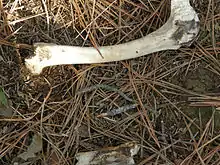
cnáim
Etymology
From Proto-Celtic *knāmis, from Proto-Indo-European *kónh₂m (“leg”). Cognate with Ancient Greek κνήμη (knḗmē, “tibia”) and English ham.
Pronunciation
- IPA(key): /knaːṽʲ/
Inflection
| Masculine i-stem | |||
|---|---|---|---|
| Singular | Dual | Plural | |
| Nominative | cnáim | cnáimL | cnámaiH |
| Vocative | cnáim | cnáimL | cnámaiH |
| Accusative | cnáimN | cnáimL | cnámaiH |
| Genitive | cnámo, cnámaH | cnámo, cnámaL | cnámaeN |
| Dative | cnáimL | cnámaibN | cnámaib |
Initial mutations of a following adjective:
| |||
Mutation
| Old Irish mutation | ||
|---|---|---|
| Radical | Lenition | Nasalization |
| cnáim | chnáim | cnáim pronounced with /ɡ(ʲ)-/ |
| Note: Some of these forms may be hypothetical. Not every possible mutated form of every word actually occurs. | ||
References
- “cnáim” in Dictionary of the Irish Language, Royal Irish Academy, 1913–76.
This article is issued from Wiktionary. The text is licensed under Creative Commons - Attribution - Sharealike. Additional terms may apply for the media files.