遭
| ||||||||
Translingual
Han character
遭 (Kangxi radical 162, 辵+11, 15 strokes in traditional Chinese and Korean, 14 strokes in mainland China and Japanese, cangjie input 卜廿田日 (YTWA), four-corner 35306, composition ⿺辶曹)
Derived characters
References
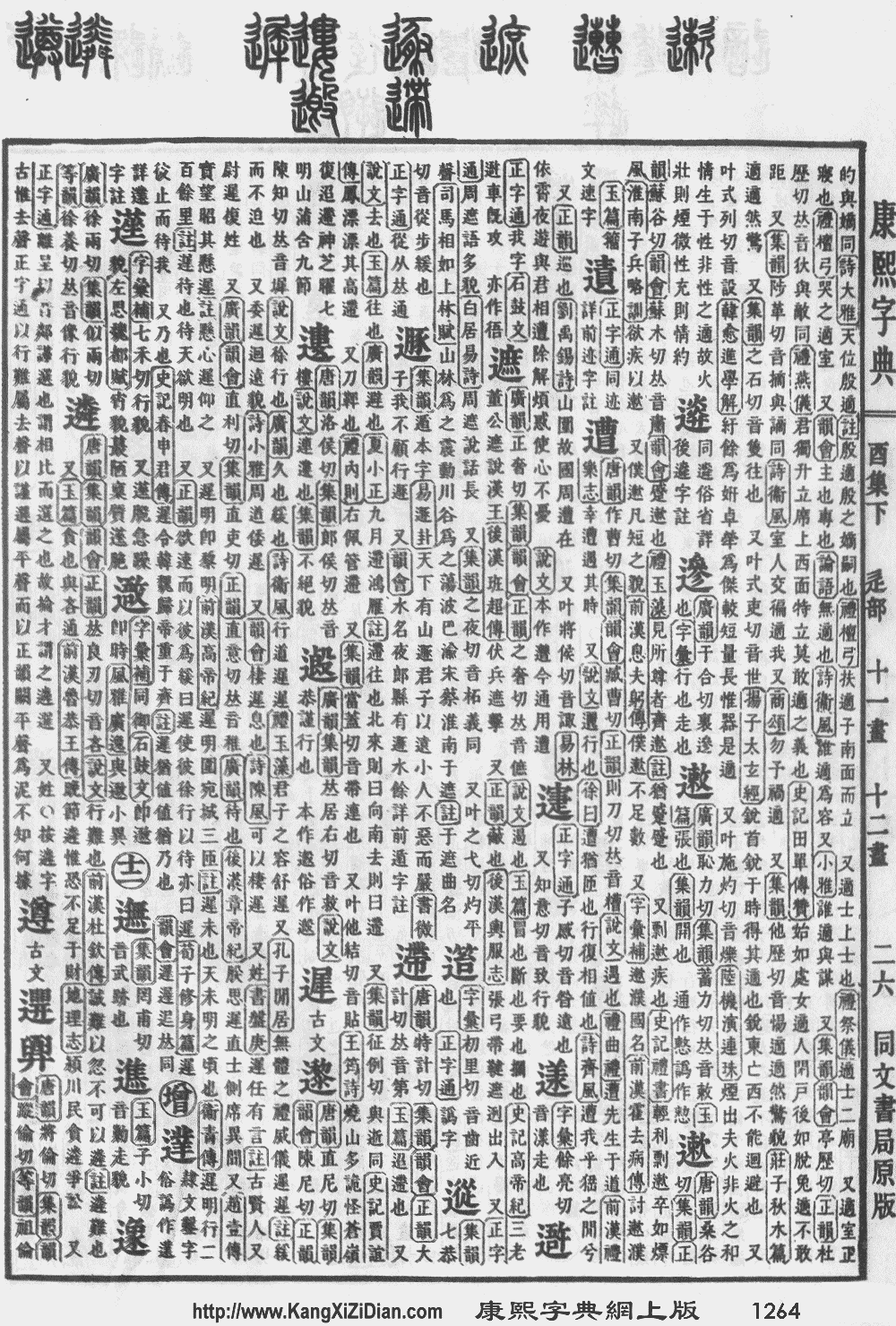
- KangXi: page 1264, character 6
- Dai Kanwa Jiten: character 39082
- Dae Jaweon: page 1759, character 16
- Hanyu Da Zidian (first edition): volume 6, page 3875, character 4
- Unihan data for U+906D
Chinese
| trad. | 遭 | |
|---|---|---|
| simp. # | 遭 | |
| 2nd round simp. | ⿺辶早 | |
Glyph origin
| Historical forms of the character 遭 | |
|---|---|
| Shuowen Jiezi (compiled in Han) | Liushutong (compiled in Ming) |
| Small seal script | Transcribed ancient scripts |
 |
 |
Characters in the same phonetic series (曹) (Zhengzhang, 2003)
Phono-semantic compound (形聲, OC *ʔsluː) : semantic 辶 (“movement”) + phonetic 曹 (OC *zluː) – to meet with (on the road).
Pronunciation
Definitions
遭
Japanese
| Shinjitai | 遭 | |
| Kyūjitai [1] |
遭󠄁 遭+ 󠄁?(Adobe-Japan1) |
 |
| 遭󠄃 遭+ 󠄃?(Hanyo-Denshi) (Moji_Joho) | ||
| The displayed kanji may be different from the image due to your environment. See here for details. | ||
Kanji
遭
- To meet with; To encounter by chance; To come across (unfavorably)
- To encounter a bad experience.
- To have an accident
Readings
Korean
Etymology
From Middle Chinese 遭 (MC t͡sɑu).
Vietnamese
This article is issued from Wiktionary. The text is licensed under Creative Commons - Attribution - Sharealike. Additional terms may apply for the media files.