椄
| ||||||||
Translingual
Han character
椄 (radical 75, 木+8, 12 strokes, cangjie input 木卜廿女 (DYTV), four-corner 40944, composition ⿰木妾)
References
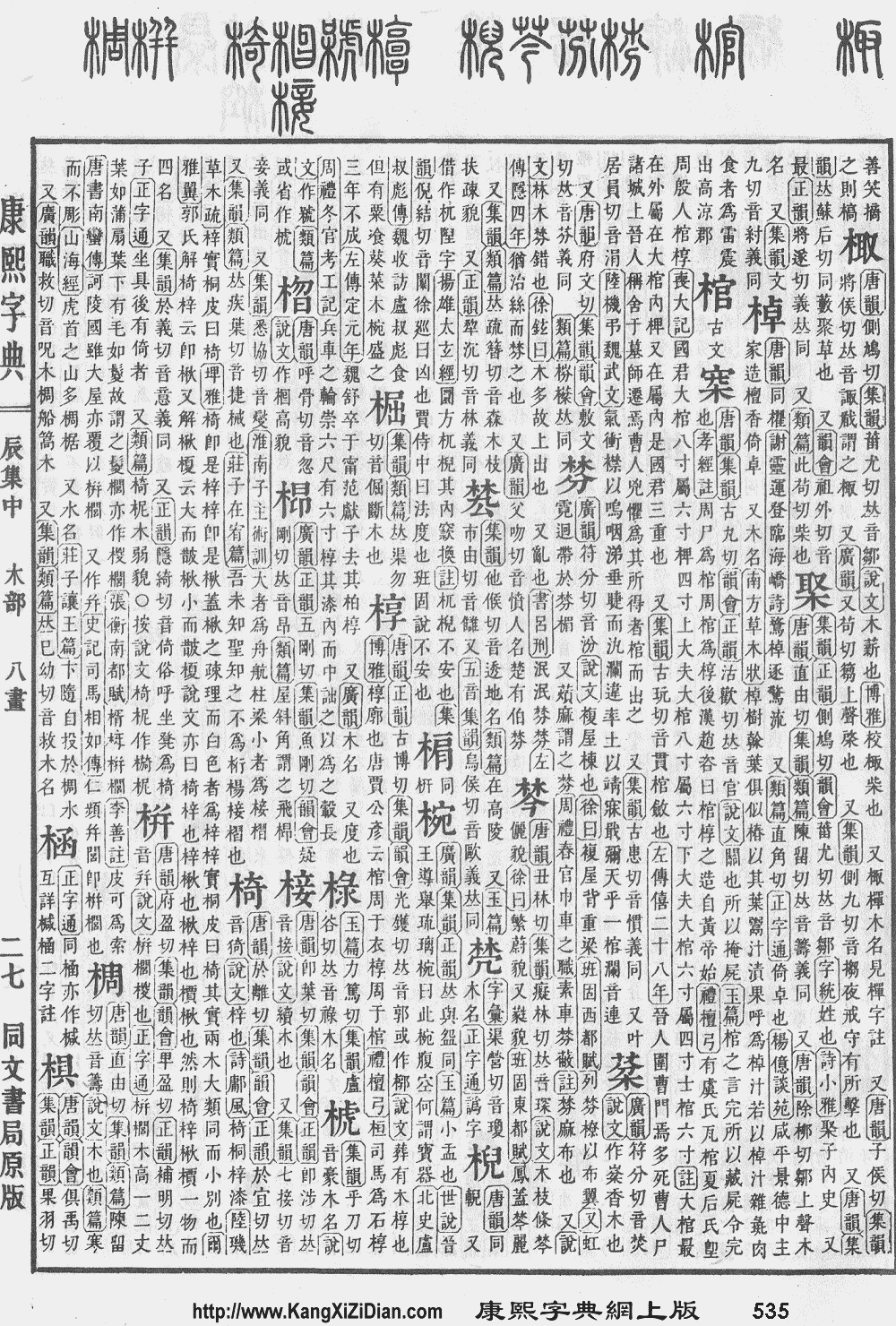
- KangXi: page 535, character 20
- Dai Kanwa Jiten: character 15008
- Dae Jaweon: page 923, character 9
- Hanyu Da Zidian: volume 2, page 1237, character 6
- Unihan data for U+6904
Chinese
| simp. and trad. |
椄 | |
|---|---|---|
Glyph origin
| Characters in the same phonetic series (妾) (Zhengzhang, 2003) | |
|---|---|
| Old Chinese | |
| 霎 | *sreːb, *sreb |
| 翣 | *sraːb |
| 帹 | *sraːb |
| 接 | *ʔseb |
| 椄 | *ʔseb |
| 菨 | *ʔseb |
| 鯜 | *ʔseb, *sʰeb |
| 妾 | *sʰeb |
| 淁 | *sʰeb |
| 踥 | *sʰeb |
Pronunciation
Japanese
Kanji
椄
- This term needs a translation to English. Please help out and add a translation, then remove the text
{{rfdef}}.
Readings
- Go-on: しょう (shō)←せふ (sefu, historical)
- Kan-on: しょう (shō)←せふ (sefu, historical)
- Kan’yō-on: せつ (setsu)
- Kun: つぐ (tsugu, 椄ぐ)
Korean
Hanja
椄 • (jeop) (hangeul 접, revised jeop, McCune–Reischauer chŏp, Yale cep)
- This term needs a translation to English. Please help out and add a translation, then remove the text
{{rfdef}}.
This article is issued from Wiktionary. The text is licensed under Creative Commons - Attribution - Sharealike. Additional terms may apply for the media files.