俅
| ||||||||
Translingual
Han character
俅 (radical 9, 人+7, 9 strokes, cangjie input 人戈十水 (OIJE), four-corner 23232, composition ⿰亻求)
References
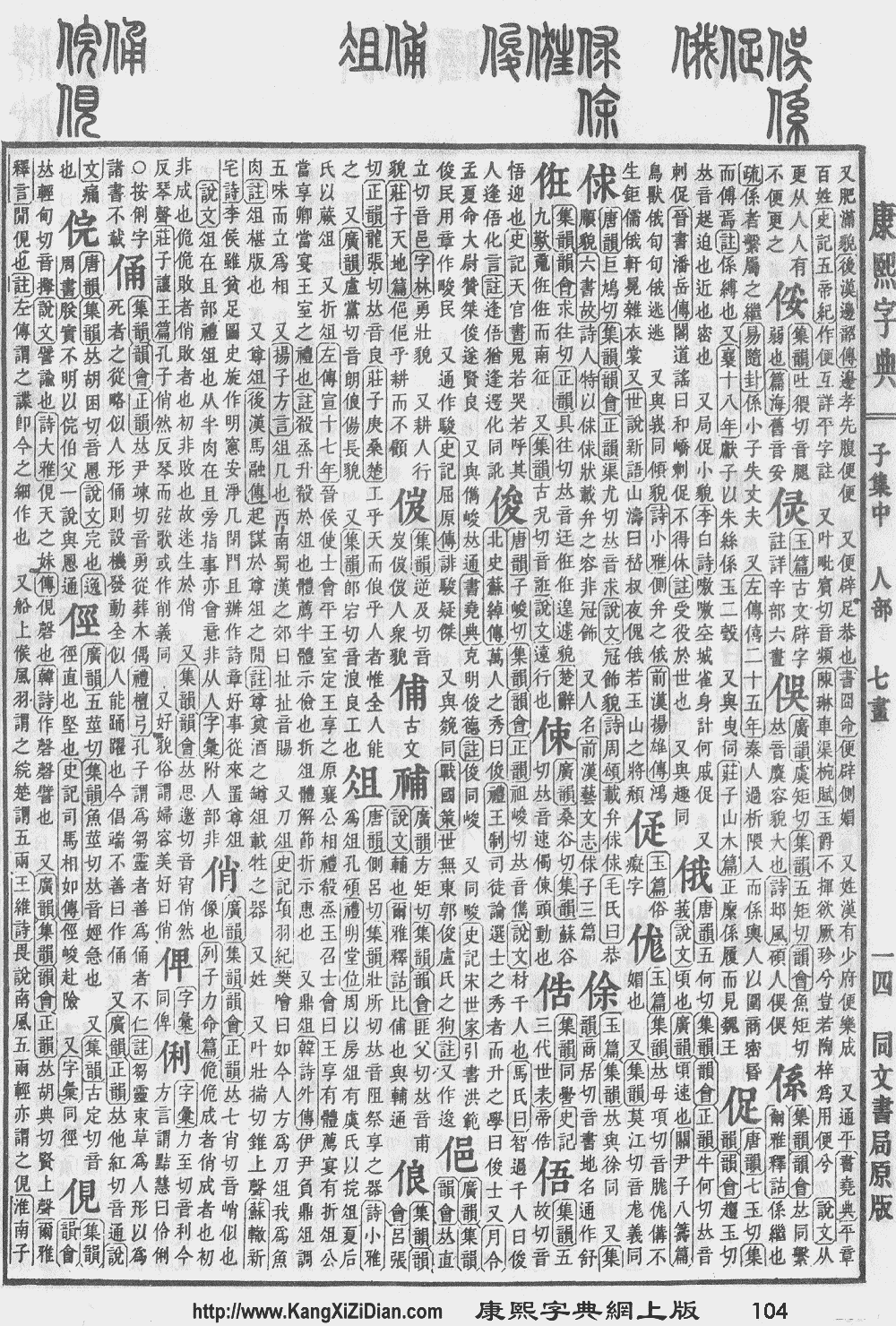
- KangXi: page 104, character 9
- Dai Kanwa Jiten: character 668
- Dae Jaweon: page 220, character 8
- Hanyu Da Zidian: volume 1, page 156, character 17
- Unihan data for U+4FC5
Chinese
| simp. and trad. |
俅 | |
|---|---|---|
Glyph origin
| Historical forms of the character 俅 | |
|---|---|
| |
|
References: Mostly from Richard Sears' Chinese Etymology site (authorisation),
|

| Characters in the same phonetic series (求) (Zhengzhang, 2003) | |
|---|---|
| Old Chinese | |
| 救 | *kus |
| 求 | *ɡu |
| 球 | *ɡu |
| 逑 | *ɡu |
| 賕 | *ɡu |
| 蛷 | *ɡu |
| 莍 | *ɡu |
| 殏 | *ɡu |
| 梂 | *ɡu |
| 俅 | *ɡu |
| 脙 | *ɡu, *qʰu |
| 絿 | *ɡu |
| 銶 | *ɡu |
| 毬 | *ɡu |
| 捄 | *ɡu, *ko |
| 觩 | *ɡu |
Pronunciation
Compounds
|
Japanese
Compounds
- 高俅 (kōkyū)
Korean
This article is issued from Wiktionary. The text is licensed under Creative Commons - Attribution - Sharealike. Additional terms may apply for the media files.