List of leaders of Ukraine
This is a list that encompasses and includes all leaders and rulers in the history of Ukraine. This page includes the titles of the Grand Prince of Kyiv, Grand Prince of Chernigov, Grand Prince of Pereiaslavl, Grand Prince of Galicia–Volhynia, Hetman of Ukraine and President of Ukraine. The following list begins with the leaders who ruled over the territory of Ukraine during Antiquity and is followed by the princes who ruled the principalities that constituted Kyivan Rus and continues with the presidents of Ukraine.
 |
|---|
 Ukraine portal Ukraine portal |

.png.webp)
The territory has been known by a plethora of names, it has been known historically as: Kyivan Rus, Rus', the Kingdom of Galicia-Volhynia, the Zaporozhian Host and the Hetmanate. The sovereigns of these fluctuating political entities have accordingly been described in a variety of ways: knyaz, knyahinya, korol, hetman and president. Two of the earliest noble titles: knyaz and velyky knyaz translate into English as "Prince" and "Grand Prince" respectively, whilst korol translates into 'king'.
The list includes its presidents both before and after the Soviet era, and the Soviet leaders themselves, who, unlike the presidents, were not formal heads of state. Ukraine has had only eight presidents since 1917, divided into two periods (1917–1921 and 1991–present). In between, the country was a part of the Soviet Union (1922–1991) with the name of Ukrainian Soviet Socialist Republic.
Kyivan Rus' (c. 375/800 – 1240/1362)
Legendary and historical rulers of Kyiv
| Portrait | Name | Born-Died | Ruled From | Ruled Until |
|---|---|---|---|---|
|
|
Kyi, a legendary founder of Kyiv, a Slavic prince of Kuyavia, most likely eastern Polans | 5th–6th centuries | 482 | ? |
|
|
Askold and Dir (Høskuldr and Dýri),[1] probably of Swedish origin, Varangian konungs, not Rurikids, were rulers (khagans) of Kyiv, not Kyivan Rus' | ? – 882 | c. 842[2] | 882 |


Rurik Dynasty
The Rurikids were descendants of Rurik (Ukrainian: Рюрик) (Hrørekr), a Varangian pagan konung or chieftain, who according to the Primary Chronicle was invited to rule Novgorod in 862 and who came to become the ruler of the Northern Slavic tribes of the (Krivchians and Slovene) as well as the Finnish tribes (Meria, Chud and Ves). Later his son or grandson, Prince Ihor, became the Prince of separate Kyivan territories to the south beginning the rule of the Riurykide dynasty of Kyivan Rus. The existence of Rurik is a point of contention for historians, P. Kovaletsky and Omeljan Pritsak believe that Rurik was the same person as Hroereckr (Rorik), the 9th century Norse king of Jutland and Frisia and that pervasive myths and legends about him formed the basis for the primary chroniclers. Alternatively, Alexsei Shakmatov accepts the Primary Chronicle's account as factual and Rurik is a historic being.[3]
Table of rulers
(Note: Here the numbering of the princes is the same for all principalities, as all were titled Princes of Rus', despite of the different parts of land and its particular numbering of the rulers. The princes are numbered by the year of their (first) succession.)
| Name | Portrait | Born | Reign | Part | Marriage (s) | Death | Notes |
|---|---|---|---|---|---|---|---|
| Rurik I (Рюрик) Old Norse: Rørik |
 |
Unknown | 862–879 | Kievan Rus' (in Novgorod) |
Unknown at least one son |
879 | Ruled as Prince of Novgorod. Founder of the family. |
| Oleg the Seer (Олег Віщий) Old Norse: Helgi[4] |
 |
Unknown | 879–912 | Kievan Rus' | Unknown | 912 | Varangian kniaz of Holmgård (Novgorod) and Kønugård (Kiev). His relationship with the family is unknown. He was probably a regent, in name of Igor, son of Rurik. Oleg extended his rule over the Derevlianians, Siverianians, Radmichians and Polianians. Began campaigns against the Khazars. Proclaimed himself Prince. |
| Igor I the Old Igor Rurikovich (Ігор Старий[5]) Old Norse: Ingvar Röreksson |
 |
c.878 Son of Rurik |
912–945 | Kyivan Rus' | 901 or 902 at least one son |
945 Iskorosten aged 66–67 |
|
| Saint Olga of Kiev (Saint Olga) (Свята Ольга) Old Norse: Helga |
.jpg.webp) |
c.890 Pskov |
945–962 | Kyivan Rus' | 11 July 969 Kiev aged 78–79 |
Regent on behalf of her minor son, she was baptized by Emperor Constantine VII but failed to bring Christianity to Kiev. | |
| Sviatoslav I the Brave Sviatoslav Igorevich (Святосла́в Хоро́брий) Old Norse: Sveinald Ingvarsson[6] |
 |
c.942 possibly Kiev Son of Igor I the Old and Saint Olga of Kiev |
962–972 | Kyivan Rus' | Predslava c.954 two sons Malusha/Malfrida[7][8] c.958 at least one son |
March 972 Khortytsia aged 29–30 |
The first true ruler of Rus' who destroyed the Khazar Khaganate and united all of the Rus' principalities under the Kiev throne. |
| Yaropolk I Yaropolk Sviatoslavich (Яропо́лк Святосла́вич) Old Norse: Iaropolk Sveinaldsson |
 |
c.950 Son of Sviatoslav I the Brave and Predslava |
972–980 | Kievan Rus' | A Greek nun at least one son |
980 Fort of Roden, near Kaniv aged 29–30 |
Supposedly was baptised into Catholicism, and then was murdered by two Varangians. |
| Vladimir I the Great Vladimir Basil Sviatoslavich (Володимир Великий/Володимѣръ Свѧтославичь) Old Norse: Valdamarr Sveinaldsson |
 |
c.958 Budiatychi Son of Sviatoslav I the Brave and Malusha/Malfrida |
980–1015 | Kievan Rus' | Olava/Allogia c.977 at least one son A Greek nun (widow of his brother) c.980 at least one son Rogneda of Polotsk c.978 (possibly in bigamy) eight children Adela (of Bulgaria?) at least two children (maximum four) Malfrida (of Bohemia?) Before 1000 two children Anna Porphyrogenita of Byzantium 988 Cherson three children Regelindis (?) of Saxony (granddaughter of Otto I, Holy Roman Emperor) After 1011 one or two daughters Unknown two children |
15 July 1015 Berestove(now part Kyiv) aged 57–58 |
His early rule is characterized by a staunch pagan reaction but in 988 he was baptized into Orthodoxy and successfully converted Kievan Rus' to Christianity. |
| Sviatopolk I the Accursed Sviatopolk Yaropolkovich (Святополк Окаянний) Old Norse: Sveinpolk Iaropolksson |
 |
c.980 Son of Sviatoslav I the Brave and Predslava |
1015–1019 | Kievan Rus' | Unknown name (daughter of Bolesław I of Poland) no children |
1019 aged 38–39 |
|
| Yaroslav I the Wise Yaroslav George Vladimirovich (Яросла́в Му́дрий) Old Norse: Jarizleifr Valdamarrsson[9] |
 |
c.978 Son of Vladimir I the Great and Rogneda of Polotsk |
1019–1054 | Kievan Rus' | Ingigerda of Sweden 1019 Novgorod eight or nine children |
20 February 1054 Vyshhorod aged 75–76 |
Prince of Rostov, Prince of Novgorod, and Grand Prince of Kiev; during his reign Kievan Rus' reached the pinnacle of its power. |
| Iziaslav I Iziaslav Demetrius Yaroslavich (Ізяслав Ярославич) Old Norse: Izjasleifr(?) Jarizleifsson |
 |
c.1024 Son of Yaroslav I the Wise and Ingigerda of Sweden |
1054–1068 1069–1073 1076–1078 |
Kievan Rus' | Gertrude of Poland 1043 three children |
3 October 1078 Nizhyn aged 53–54 |
Reigned three times, threatened by the power of his relatives Vseslav of Polotsk (1068–69) and Sviatoslav II of Kiev (1073–76). First King of Rus', Pope Gregory VII sent him a crown from Rome in 1075. |
| Vseslav I the Seer Vseslav Basil Bryacheslavich (Всеслав Брячиславич) |
 |
c.1039 Polotsk Son of Bryachislav of Polotsk |
1068–1069 | Kievan Rus' | Unknown six sons |
24 April 1101 Polotsk aged 61–62 |
A brief ruler during Iziaslav's official reign. Also Prince of Polotsk. |
| Sviatoslav II Sviatoslav Nicholas Yaroslavich (Святослав Ярославич) Old Norse: Sveinald Jarizleifsson |
 |
c.1027 Kiev Son of Yaroslav I the Wise and Ingigerda of Sweden |
1073–1076 | Kievan Rus' | Cecilia of Dithmarschen[10] Between 1043 and 1047 five children Oda of Stade (Nordmark) c.1065 one son |
27 December 1076 Kiev aged 48–49 |
A brief ruler during his brother Iziaslav's official reign. |
| Vsevolod I Vsevolod Andrew Yaroslavich (Всеволод Ярославич) Old Norse: Vissivald Jarizleifsson |
 |
c.1030 Son of Yaroslav I the Wise and Ingigerda of Sweden |
1078–1093 | Kievan Rus' | Anastasia of Byzantium c.1053 two children Anna of the Kipchaks c.1070 four children |
13 April 1093 Vyshhorod aged 62–63 |
Usurped the throne from his nephew, Yaropolk Iziaslavich. |
| Saint Yaropolk (III) Izyaslavich Yaropolk Peter Iziaslavich (Ярополк Ізяславич) Old Norse: Iaropolk Izjasleifsson (?) |
 |
c.1043 Son of Iziaslav I and Gertrude of Poland |
1078–1087 | Kievan Rus' | Kunigunde of Meissen c.1071 four children |
22 November 1087 Zvenyhorod aged 62–63 |
As hereditary King of Rus (title assumed until his death), was a legitimate contestant for the throne, usurped by his uncle. |
| Sviatopolk II Sviatopolk Michael Iziaslavich (Всеволод Ярославич) Old Norse: Sveinpolk Izjasleifsson (?) |
 |
8 November 1050 Son of Iziaslav I and Gertrude of Poland |
1093–1113 | Kievan Rus' | Unknown name (daughter of Spytihněv II of Bohemia)[11] c.1085 three children Olenna of the Kipchaks c.1094 four children |
26 April 1113 Vyshhorod aged 62 |
Recovered the throne of his father from his uncle. However, his descendants lost their rights to the Kievan throne. After the division of the territory made in the Council of Liubech of 1097, Kievan Rus' gradually lost its importance, and from 1132 changed name to Kiev. |
| After the Council of Liubech in 1097 Kievan Rus' entered a feudal period and was divided into principalities ruled by the Rurikid family princes who were in a constant power struggle with each other. Major principalities were: Galicia-Volhynia, Kiev, Chernihiv, and Pereiaslavl. In the period of 1240–1362, the three latter ones were forced to accept the Golden Horde overlordship. See List of early East Slavic states | |||||||
| Davyd I Sviatoslavich |  |
1050 | 1097–1123 | Chernigov | Teodosia five children |
1123 | Son of Sviatoslav II. |
| David I Igorevich |  |
1055 | 1097–1099 | Volhynia | Unknown three children |
25 May 1112 | Grandson of Yaroslav I. |
| Vladimir II Monomakh Vladimir Basil Vsevolodovich (Володимир Мономах) Old Norse: Valdamarr Vissivaldsson |
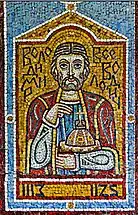 |
1053 Son of Vsevolod I and Anastasia of Byzantium |
1097–1113 | Pereiaslavl | Gytha of Wessex c.1074 five or six children Euphemia of Byzantium c.1100 six or seven children Unknown name (daughter of Aepa Ocenevich, Khan in Cumania) After 1107 no known children |
19 May 1125 Kiev aged 71–72 |
Ruled against his relative Sviatopolk II until his own accession to the throne in 1113. He is considered to be the last ruler of the united Kievan Rus'. |
| 1113–1125 | Kievan Rus' | ||||||
| Mstislav Sviatopolkovich |  |
? | 1099 | Volhynia | Unknown | 1099 | Son of Sviatopolk II. |
| Yaroslav Sviatopolkovich |  |
c. 1070 | 1099–1118 | Volhynia | Unknown (daughter of Ladislaus I of Hungary) c.1091 Judith-Maria of Poland c.1106 Unknown (daughter of Mstislav I of Kiev) c.1112 three/four children in total |
May 1124 | Son of Sviatopolk II. |
| Sviatoslav III Vladimirovich |  |
? | 1113–1114 | Pereiaslavl | Unmarried | 6 March 1114 | Son of Vladimir II Monomakh. |
| Roman Vladimirovich |  |
? | 1118–1119 | Volhynia | Unknown | 6 January 1119 | Son of Vladimir II Monomakh. |
| Constantine |  |
1070 | 1123–1127 | Chernigov | Unknown three children |
1129 | Son of Sviatoslav II. |
| Mstislav I the Great Mstislav Theodore Vladimirovich (Мстислав Великий) Old Norse: Haraldr Valdamarrsson |
.jpg.webp) |
1 June 1076 Turov Son of Vladimir II Monomakh and Gytha of Wessex |
1125–1132 | Kievan Rus' | Christina of Sweden 1095 ten children Liubava Dmitrievna of Novgorod 1122 two children |
14 April 1132 Kiev aged 55 |
After his reign Kievan Rus' fell into recession starting a rapid decline. |
| Yaropolk II |  |
1082 | 1114–1132 | Pereiaslavl | Helena of Ossetia 1116 one child |
18 February 1139 | Brother of Mstislav I. |
| 1132–1139 | Kyiv | ||||||
| Vsevolod II |  |
1103 | 1132 | Pereiaslavl | Anna before 1125 four children |
11 February 1138 | Son of Mstislav the Great. |
| Yuri I the Long-Armed |  |
1099 | 1132 1134–1135 |
Pereiaslavl | Two wives fifteen children |
15 May 1157 | Son of Vladimir II Monomakh. |
| Iziaslav II |  |
1096[12] | 1132–1133 | Pereiaslavl | Agnes of Germany before 1151 five children Rusudan of Georgia[12] 1154 no children |
13 November 1154[12] | Son of Mstislav the Great. 1st time. |
| Viacheslav I |  |
1083 | 1133–1134 | Pereiaslavl | Unknown before 1139 one child |
2 February 1154 | 1st time in both principalities. Deposed. |
| 1139 | Kyiv | ||||||
| Andrew I the Good |  |
11 August 1102 | 1119–1135 | Volhynia | Unknown (daughter of Tugor-khan of Polotsk) c.1117 two children |
22 January 1141 | Son of Vladimir II Monomakh. |
| 1135–1141 | Pereiaslavl | ||||||
| Iziaslav II |  |
1096[12] | 1135–1141 | Volhynia | Agnes of Germany before 1151 five children Rusudan of Georgia[12] 1154 no children |
13 November 1154[12] | Son of Mstislav the Great. 1st time. |
| Vsevolod II |  |
1104 | 1127–1139 | Chernigov | Maria of Rus' 1116 one child |
1 August 1146 | Grandson of Sviatoslav II, married Maria, sister of Mstislav the Great, Yaropolk II and Viacheslav I. |
| 1139–1146 | Kiev | ||||||
| Sviatoslav IV |  |
1123 | 1141–1146 | Volhynia | Maria of Polotsk 1143 eight children |
25 July 1194 | Son of Vsevolod II. |
| Saint Igor II |  |
1096 | 1146 | Kyiv | Unmarried | 19 September 1147 | Brother of Vsevolod II. Deposed. |
| Vladimir II Davidovich |  |
? | 1139–1151 | Chernigov | Unknown 1144 one child |
12 May 1151 | Son of his predecessor. |
| Volodymyrko Volodarovych |  |
1104 | 1141–1153 | Halych | Sophia of Hungary c.1117 four children |
1153 | Reunited the principalities of Zvenigorod, Peremyshl, and Terebovlia under his rule, to form the Principality of Halych. |
| Iziaslav II | |
1096[12] | 1141–1146 | Pereiaslavl | Agnes of Germany before 1151 five children Rusudan of Georgia[12] 1154 no children |
13 November 1154[12] | Son of Mstislav the Great |
| 1146–1149 | Kiev and Volhynia | ||||||
| 1149–1151 | Volhynia | ||||||
| 1151–1154 | Kyiv | ||||||
| Mstislav II the Brave |  |
1125 | 1146–1149 1151–1154 |
Pereiaslavl | Agnes of Poland 1151 three children |
19 August 1170 | Son of Iziaslav II. |
| Yuri I the Long-Armed | |
1099 | 1149–1151 1155–1157 |
Kyiv | Two wives fifteen children |
15 May 1157 | Son of Vladimir II Monomakh. |
| Rostislav |  |
? | 1149–1151 | Pereiaslavl | Unknown before 1151 three children |
1151 | Son of Yuri I. |
| Sviatopolk II |  |
After 1096 | 1151–1154 | Volhynia | Euphemia of Olomouc[13] 1143 or 1144 no children |
20 February 1154 | Son of Mstislav the Great. |
| Iziaslav III |  |
1115 | 1151–1154 | Chernigov | Unknown one child |
6 March 1161 | Grandson of Sviatoslav II. In 1161 jointly with Rostislav I. |
| 1154–1155 | Kyiv | ||||||
| 1155–1157 | Chernigov | ||||||
| 1157–1158 1161 |
Kyiv | ||||||
| Rostislav I |  |
1110 | 1154 1158–1162 |
Kyiv | Unknown eight children |
14 March 1167 | Brother of Iziaslav II. |
| Yaroslav Osmomysl |  |
1130 | 1153–1187 | Halych | Olga Yurievna of Vladimir-Suzdal four children Nastasia one child |
1 October 1187 | |
| Vladimir III Mstislavich |  |
1132 | 1154–1157 | Volhynia | Unknown name (daughter of Grand Prince Beloš Vukanović of Serbia) 1150 four children |
1173 | Son of Mstislav the Great. |
| Sviatoslav III Olgovich |  |
1106/1107 | 1154–1155 1157–1164 |
Chernigiv | Unknown six children |
1164 | Grandson of Sviatoslav II. |
| Mstislav II the Brave | |
1125 | 1157–1170 | Volhynia | Agnes of Poland 1151 three children |
19 August 1170 | Son of Iziaslav II. |
| 1167–1169 1170 |
Kyiv | ||||||
| Gleb |  |
1125 | 1154–1169 | Pereiaslavl | Unknown 1154 three children |
20 January 1171 | Son of Yuri I. |
| 1169 1170–1171 |
Kyiv | ||||||
| Vladimir III |  |
1157 | 1169–1187 | 18 April 1187 | Pereiaslavl | Unknown 1180 no children | Son of his predecessor. |
| Vladimir III Mstislavich | |
1132 | 1171 | Kiev | Unknown name (daughter of Grand Prince Beloš Vukanović of Serbia) 1150 four children |
1173 | Son of Mstislav the Great. |
| Sviatoslav Mstislavich |  |
? | 1170–1173 | Volhynia | Unknown | 1173/93 | Son of Mstislav the Brave. |
| Roman II the Great |  |
1152 | 1173–1188 | Volhynia | Predslava of Kiev 1170 or 1180 two children Anna Angelina of Byzantium c.1197 two children |
19 June 1205 | Son-in-law of Rurik II. |
| Vsevolod Mstislavich | |
? | 1188 | Volhynia | Unknown | 1196 | Son of Mstislav the Brave. |
| Roman I |  |
before 1149 | 1171–1173 1175–1177 |
Kiev | Maria of Novgorod 9 January 1149 three children |
14 June 1180 | Son of Rostislav I. |
| Michael I | .jpeg.webp) |
1151 | 1171 | Kiev | Theodosia before 1176 two children |
20 June 1176 | Son of Yuri I. |
| Vsevolod III the Big Nest |  |
1151 | 1173 | Kiev | Maria Shvarnovna fourteen children Liubava Vasilkovna of Vitebsk 1209 no children |
15 April 1212 | Son of Yuri I. |
| Rurik II |  |
before 1157 | 1173 1180–1182 1194–1202 1203–1204 1206 1207–1210 |
Kiev | Unknown 1163 Anna of Turov[14] before 1176 six children |
1215 | Son of Rostislav I. |
| Yaroslav II |  |
1132 | 1174–1175 1180 |
Kiev | Richeza of Bohemia 1149 four children |
1180 | Son of Iziaslav II. |
| Sviatoslav IV | |
1123 | 1164–1173 | Chernigov | Maria of Polotsk 1143 eight children |
25 July 1194 | Son of Vsevolod II. |
| 1173–1174 | Kiev and Chernigov | ||||||
| 1174–1177 | Chernigov | ||||||
| 1177–1180 | Kiev and Chernigov | ||||||
| 1182–1194 | Kiev | ||||||
| Yaroslav II Vsevolodovich |  |
1139 | 1180–1198 | Chernigov | Irene[15][16][17] before 1171 three children |
1198 | Son of Vsevolod II. |
| Oleg Yaroslavich Nastasich | |
? | 1187 | Halych | Unknown | 1187/8 | |
| Yaroslav II the Red |  |
? | 1187–1199 | Pereiaslavl | Unmarried | 1199 | Grandson of Yuri I. |
| Vladimir Yaroslavich | |
? | 1187–1188 1189–1199 |
Halych | Boleslava c.1166 one child |
1187/8 | |
| Igor II the Brave |  |
3 April 1151 | 1198–1201 | Chernigov | Euphrosyne Yaroslavna of Halych[18] before 1170 five children |
1201 | Son of Sviastoslav (IV) Olgovich. |
| Igor III |  |
1152 | 1202–1203 1212–1214 |
Kiev | Unknown five children |
1220 | |
| Yaroslav III |  |
8 February 1191 | 1199–1206 | Pereyaslavl | Unknown 1205 no children Rostislava of Novgorod 1214 (annulled 1216) no children Theodosia of Ryazan 1218 twelve children |
30 September 1246 | Son of Vsevolod III of Kiev. |
| Oleg II Sviatoslavich |  |
? | 1202–1204 | Chernigov | Unknown 1176 two children |
1204 | Sons of Sviatoslav V, co-ruled in Chernigov. |
| Vsevolod IV the Red |  |
? | 1201–1206 | Chernigov | Maria of Poland 14 October or 24 December 1178[19] or 14 November 1179 one child |
August 1212 | |
| 1206–1207 | Kiev and Chernigov | ||||||
| 1207–1210 | Chernigov | ||||||
| 1210–1212 | Kiev and Chernigov | ||||||
| Roman II the Great (Роман Мстиславич) |
|
1152 Son of Mstislav II of Kiev and Agnes of Poland |
1188–1189 | Volhynia and Halych | Predslava of Kiev 1170 or 1180 two children Anna-Euphrosyne Angelina c.1197 two children |
19 June 1205 Zawichost aged 52–53 |
Son-in-law of Rurik II. His reign marked the rise of Galicia-Volhynia as a Kievan Rus' successor state. |
| 1189–1198 | Volhynia | ||||||
| 1198–1204 | Volhynia and Halych, then Galicia-Volhynia | ||||||
| 1204–1205 | Kiev and Galicia-Volhynia | ||||||
| Rostislav II | .jpg.webp) |
13 April 1172 | Kiev | Verchoslava of Kiev 15 June 1187 one child |
3 March 1218 | Son of Rurik II and son-in-law of Vsevolod III. Ruled with Roman, his brother-in-law. | |
| Saint Michael II |  |
1185 | 1206 | Pereyaslavl | Helena of Galicia-Volhynia 1210 or 1211[20] seven children |
20 September 1246 | Son of Vsevolod the Red. |
| Vladimir IV |  |
September- December 1187 | 1206–1213 | Pereyaslavl | unknown before 1239 four children |
3 March 1239 | Son of Rurik II. |
| Rurik II | |
before 1157 | 1212–1215[21] | Chernigov | Unknown 1163 Anna of Turov[14] before 1176 six children |
1215 | Son of Rostislav I. |
| Vladimir V Vsevolodovich | 26 October 1192 | 1213–1215[22] | Pereyaslavl | unknown before 1239 four children |
6 January 1227 | Son of Vsevolod the Big Nest. After his death the Principality was integrated on the Principality of Yaroslavl and then on the Principality of Vladimir. | |
| Pereyaslavl was annexed by Yaroslavl, and then by Vladimir-Suzdal. See List of Russian rulers for later princes. | |||||||
| Mstislav III the Old |  |
1156 | 1214–1223 | Kiev | Unknown 1116 seven children |
2 June 1223 | Son of Roman II. |
| Gleb I | c.1168 | 1215–1217 | Chernigov | Anastasia of Kiev 1183 three children |
1215 or 1220[16] | Son-in-law of Rurik II. | |
| Mstislav I | c.1168 | 1217–1223 | Chernigov | Yasynya-Marfa Shvarnovna 1183 four children |
31 May 1223 | Brother-in-law of Vsevolod the Big Nest. | |
| Vladimir IV | |
September- December 1187 | 1223–1233 | Kiev | unknown before 1239 four children |
3 March 1239 | Son of Rurik II. |
| Saint Michael II | |
1185 | 1223–1234 | Chernigov | Helena of Galicia-Volhynia 1210 or 1211[20] seven children |
20 September 1246 | Son of Vsevolod the Red. 1st time. |
| Iziaslav IV | 1186 | 1233–1236 | Kiev | Agafia no children |
1255 | Son of Mstislav III. | |
| Mstislav II | before 1215/1220 | 1234–1239 | Chernigov | Unknown before 1239 two children |
after 18 October 1239 | ||
| Yaroslav III | |
8 February 1191 | 1236–1238 1246 |
Kiev | Unknown 1205 no children Rostislava of Novgorod 1214 (annulled 1216) no children Theodosia of Ryazan 1218 twelve children |
30 September 1246 | Son of Vsevolod III of Kiev. |
| Saint Michael II | |
1185 | 1238–1239 1239–1243 |
Kiev | Helena of Galicia-Volhynia 1210 or 1211[20] seven children |
20 September 1246 | Son of Vsevolod the Red. While in negotiations with the Golden Horde, his son Rostislav Mikhailovich took briefly Kiev throne in 1239, before being expelled by Daniel of Galicia, who put Voivode Dmytro to protect Kiev's throne until Michael's return in 1240. However the city was destroyed in that year. Regained Chernihiv throne in 1243, co-ruling with Andrew Mstislavich. |
| 1243–1246 | Kiev and Chernigov | ||||||
| Andrew I Mstislavich[23] | ? | 1245–1246 | Chernigov | Unknown | 1246 | Son of Mstislav II. Co-ruling with Michael II. | |
| Rostislav Mikhailovich | after 1210 | 1239–1243 | Chernigov | Anna of Hungary 1243 five children |
1262 | Son of Michael the Saint. | |
| 1239 | Kiev | ||||||
| Andrew II Vsevolodovich | ? | 1246–1263 | Chernigov | Unknown | 1263 | Brother of Michael II. | |
| Saint Alexander Nevsky |  |
13 May 1221 | 1246–1263 | Kiev | Praskovia-Alexandra of Polotsk 1239 five children Vassilissa before 1263 no children |
14 November 1263 | Son of his predecessor. |
| Yaroslav IV |  |
1230 | 1263–1272 | Kiev | Natalia before 1252 two children Saint Xenia of Tarusa 1265 four children |
16 September 1272 | Brother of his predecessor. |
| Leo I |  |
1228 | 1272–1301 | Kiev | Constance of Hungary 1116 one child |
1301 | Son of Daniel I. Also King of Galicia-Volhynia. After his death in 1301, Kiev fell in the hands of the Grand Duchy of Lithuania. Util at least 1362, were installed Lithuanian governors in Kiev.[24] |
Kings and Princes of Galicia-Volhynia (1199–1349)
Galicia-Volhynia was a Ruthenian[25][26][27][28][29][30] state in Galicia and Volhynia. Depending on the title of the ruler it was called either principality or kingdom. The first king, Coloman of Galicia-Lodomeria, was crowned in 1215, although the first nominal king of Galicia was Andrew II of Hungary, the son of Béla III of Hungary, who reigned from 1188 to 1190.[31][32][33]
| Portrait | Name | Born-Died | Ruled From | Ruled Until |
|---|---|---|---|---|
| Roman II the Great, Prince of Novgorod (1168–1170), Prince of Volhynia (1170–1188, 1189–1205), Prince of Halych (1188, 1199–1205), and Grand Prince of Kiev (1204–1205) | fl.1160–1205 | 1199 | 1205 |
 | Coloman of Galicia-Lodomeria, Hungarian prince Kálmán, Prince of Halych (1214–15), became the first anointed and crowned and King of Galicia-Volhynia (rex Galiciae et Lodomeriae) in 1215 | 1208–1241 | 1214 | 1219 |
| Daniel I of Galicia, held many titles since early childhood culminating with the crowning by a papal legate, archbishop Opizo, in Dorohychyn in 1253, King of Rus', Grand Prince of Kiev | 1201–1264 | 1205 | 1264 | |
| Lev I, King of Rus', Prince of Belz (1245–1264), Prince of Peremyshl and Halych (1264–1269) who moved the capital of Galicia from Kholm to Lviv in 1272, Grand Prince of Kiev (1271–1301) | 1228–1301 | 1293 | 1301 | |
 | Yuri I, King of Rus', Prince of Belz (1264–1301) | fl.1252–1308 | 1301 | 1308 |
 | Andrew II and Lev II, Kings of Rus', princes, joint rule, the last members of the Rurikid dynasty to rule Ukraine | ?–1323 | 1308 | 1323 |
 | Yuri II Boleslav, natus dux et dominus Russiae, a member of the Piast dynasty (the first historical ruling dynasty of Poland) | 1308–1340 | 1325 | 1340 |
 | Liubartas, prince, a member of the Gediminid dynasty, the last Ruthenian-Lithuanian ruler of Galicia-Volhynia, Prince of Volhynia (1323–1384) | c. 1300–1384 | 1340 | 1349 |
In 1349, Liubartas lost all territories, except for eastern Volhynia, to Casimir III of Poland. In 1366, a Polish-Lithuanian treaty was signed: eastern Volhynia with Lutsk retained under Liubartas' rule (the Grand Duchy of Lithuania), while Galicia, western Volhynia, and western Podolia were annexed by the Crown of the Kingdom of Poland.
In the Grand Duchy of Lithuania (1362–1569) and Kingdom of Poland (1569–1667/1793)
Princes of Kiev
In the early 1320s, a Lithuanian army led by Gediminas defeated a Slavic army led by Stanislav of Kiev at the Battle on the Irpen' River, and conquered the city. The Tatars, who also claimed Kiev, retaliated in 1324–1325, so while Kiev was ruled by a Lithuanian prince, it had to pay a tribute to the Golden Horde. Finally, as a result of the Battle of Blue Waters in 1362, Kiev and surrounding areas were incorporated into the Grand Duchy of Lithuania by Algirdas, Grand Duke of Lithuania.
- Algimantas Alšėniškis (Olgimunt Holszański, Olgimont-Mykhailo Olshansky) (1324–1331)
- Fiodor of Kiev a.k.a. Teodoras Butvydaitis, brother of Gediminas (1331–1362)
- Vladimiras Algirdaitis (Volodymyr Olgerdovych) (1362–1394)
- Skirgaila (1395–1397)
- Ivan Olshansky (Jonas Alšėniškis) (1397–c. 1402)
- Jurgis Gedgaudas; lt (Jerzy Giedygołd) (1404–1411)
- Andriy Ivanovych Olshansky (c. 1412–c. 1422)
- Mykhailo Ivanovych Olshansky (1422–1432)
- Mykhailo Semenovych Boloban Olshansky (1433–1435)
- Švitrigaila (1435–c. 1440), Grand Duke of the Rus' (1432–c. 1440)
- Aleksandras Olelka (Olelko Volodymyrovych) (1443–1454)
- Simonas Olelkaitis (Semen Olelkovych) (1454–1471)

Voivodes of Kiev
When the Polish–Lithuanian Commonwealth was formed by the Union of Lublin in 1569, Kiev and surrounding areas, Podolia, Volhynia, and Podlaskie, as the Kiev Voivodeship, Bratslav Voivodeship, Volhynian Voivodeship, and Podlaskie Voivodeship, were transferred from Lithuania to Poland.
Hetmans of Ukrainian Cossacks (1506–1775)
A Hetman was a military and civil leader, democratically elected by the Cossacks.
Hetmans and commanders of Ukrainian Cossacks
Several Cossack regiments were operating in Ukraine at this time that were largely independent of each other, so some of the Hetmans' tenures overlap.
| 1486–1492 |  |
Yurii Pats | governor of Kyiv; organizer Cossack units. |
|---|---|---|---|
| 1488–1495 |  |
Bohdan Hlynskyi | Cossack leader, destroyer Ochakov. |
| 1492–1505 |  |
Dmytro Putyatych | Cossack leader. |
| 1510–1524 |  |
Senko Polozovych | governor of Kyiv; Cossack leader. |
| 1514–1535 |  |
Ostap Dashkevych | Cossack leader. |
| 1516–1528 |  |
Przecław Lanckoroński | Cossack leader. |
| 1550–1557 |  |
Dmytro Vyshnevetsky | founder of the fortress at Minor Khortytsia. |
| 1568 | |
Semen Birulia | Cossack leader. |
| 1568 | |
Karpo Maslo | Cossack leader. |
| 1568 | |
Andrush | Moldavian boyar Cossack leader. |
| 1568 | |
Lisun | Cossack leader. |
| 1568 | |
Yatsko Bilous | Cossack leader. |
| 1568 |  |
Andrii Liakh | Cossack leader. |
| 1577–1578 | |
Ivan Pidkova | Cossack leader. |
| 1578 |  |
Lukian Chornynskyi | Cossack leader, hetman. |
| 1581 |  |
Samiilo Zborovskyi | Cossack leader, hetman. |
| 1584 | |
Bohdan Mykoshynskyi | Cossack leader, hetman. |
| 1585 |  |
Mykhailo Ruzhynskyi | Cossack leader, hetman. |
| 1585 | |
Kyryk Ruzhynskyi | Cossack leader, hetman. |
| 1585 | |
Zakhar Kulaha | Cossack leader, hetman. |
| 1586 | |
Lukian Chornynskyi | Cossack leader, hetman. |
| 1586 | |
Bohdan Makoshynskyi | Cossack leader, hetman. |
| 1588 | |
Potrebatskyy | Cossack leader, hetman. |
| 1589 | |
Zachary Kulaga | Cossack leader, hetman. |
| 1594 | |
Bohdan Mykoshynskyi | Cossack leader, hetman. |
| 1594–1596 |  |
Hryhoriy Loboda | Cossack leader. |
| 1594–1596 | |
Severyn Nalyvaiko | Cossack leader. |
| 1596 | |
Matvii Shaula | Cossack leader, hetman. |
| 1596 |  |
Kryshtof Krempskyi | Cossack leader, hetman. |
| 1596 |  |
Kryshtof Nechkovskyi | Cossack leader, hetman. |
| 1596–1597 |  |
Hnat Vasylevych | Cossack leader, hetman. |
| 1597 |  |
Tykhin Baibuza | Cossack leader, hetman. |
| 1598 | |
Florian Hedroits | Cossack leader. |
| 1598 | |
Mitlovskyi | Cossack leader. |
| 1602–1603 | |
Ivan Kutskovych | Cossack leader, hetman. |
| 1603 | |
Ivan Kosyi | Cossack leader, hetman. |
| 1606 | |
Hryhorii Izapovych | Cossack leader, hetman. |
| 1606 | |
Samiilo Zborovskyi | Cossack leader, hetman. |
| 1606 | |
Bohdan Olevchenko | Cossack leader, hetman. |
| 1617 | |
Dmytro Barabash | Cossack leader, hetman. |
| 1618 | |
Mykhailo Skyba | Cossack leader. |
| 1619–1621 | |
Yatsko Nerodych | Cossack leader, hetman. |
| 1620 | |
Petro Odynets | Cossack leader. |
| 1624 |  |
Hryhoriy Chorny | Cossack leader, hetman. |
| 1625 | |
Fedir Pyrskyi | Cossack leader, hetman. |
| 1628 | |
Hryhoriy Chorny | Cossack leader, hetman. |
| 1629–1630 | |
Hryhoriy Chorny | Cossack leader, hetman. |
| 1630 | |
Taras Fedorovych | Cossack leader, hetman. |
| 1632 | |
Andrii Didenko | Cossack leader, hetman. |
| 1633 |  |
Dorofii Doroshenko | Cossack leader, acting hetman. |
| 1633 | |
Dorosh Kutskovych | Cossack leader, acting hetman. |
| 1633 | |
Hyria Kanevets | Cossack leader. |
| 1633–1635 | |
Ivan Sulyma | Cossack leader, hetman. |
| 1636–1637 | |
Vasyl Tomylenko | Cossack leader, hetman. |
| 1637 | |
Pavlo Pavliuk | Cossack leader, hetman. |
| 1638 |  |
Yakiv Ostrianyn | Cossack leader, hetman. |
| 1638 | |
Dmytro Hunia | Cossack leader, hetman. |
| 1639–1642 | |
Karpo Pivtora-Kozhukha | Cossack leader, hetman. |
| 1642–1646 | |
Maksym Hulak | Cossack leader, hetman. |
Hetmans of the Cossack state
Following the Khmelnytsky uprising a new Cossack republic, the Hetmanate, was formed.
| No. | Hetman | Elected (event) | Took office | Left office | |||
|---|---|---|---|---|---|---|---|
| 1 |  |
|
Bohdan Khmelnytsky (1596–1657) Зиновій-Богдан Хмельницький |
1648 (Sich) | 26 January 1648 | 6 August 1657 | died |
| 2 |  |
|
Yurii Khmelnytsky (1641–1685) Юрій Хмельницький |
death of his father | 6 August 1657 | 27 August 1657 | reconsidered by the Council of Officers |
| 3 | .png.webp) |
 |
Ivan Vyhovsky (1600s–1664) Іван Виговський |
1657 (Korsun) | 27 August 1657 (confirmed: 21 October 1657) |
11 September 1659 | surrendered title |
| 4 | |
|
Yurii Khmelnytsky (1641–1685) Юрій Хмельницький |
1659 (Hermanivka) | 11 September 1659 (confirmed: 11 September 1659) |
October 1662 | surrendered title |
Hetmans during the Ruin
The Ruin (1660–1687) was a time in Ukrainian history when the country fell into disarray and chaos. Afterwards, the Cossack state emerged as a vassal of the Russian Empire. During this period a number of hetmans stayed in power for short periods of time and often controlled only parts of the country. Moreover, the Treaty of Andrusovo (1667) split the Cossack Hetmanate along the Dnieper River into Left-bank Ukraine, which enjoyed a degree of autonomy within the Tsardom of Russia; and Right-bank Ukraine which remained part of the Polish–Lithuanian Commonwealth, and at times (1672–1699) part of the Ottoman Empire.
| Right-bank Ukraine | Left-bank Ukraine | ||||||
|---|---|---|---|---|---|---|---|
| Polish protectorate | Russian protectorate | ||||||
| 1660—1663 | |
Yurii Khmelnytsky | 1660—1663 | |
Yakym Somko | ||
| 1663—1665 |  |
Pavlo Teteria | 1663—1668 |  |
Ivan Briukhovetsky | ||
| 1665—1668 |  |
Petro Doroshenko | |||||
| Unification | |||||||
| 1668—1669 | |
Petro Doroshenko | |||||
| Partition | |||||||||||
|---|---|---|---|---|---|---|---|---|---|---|---|
| Right-bank Ukraine | Left-bank Ukraine | ||||||||||
| Osman protectorate | Polish protectorate | Russian protectorate | Swedish protectorate | ||||||||
| 1669—1676 | |
Petro Doroshenko | 1669—1674 |  |
Mykhailo Khanenko | 1669—1672 |  |
Demian Mnohohrishny | |||
| 1678—1681 | |
Yurii Khmelnytsky | 1675—1679 | |
Ostap Gogol | 1672—1687 |  |
Ivan Samoilovych | |||
| 1681—1684 | |
Gheorghe Duca | 1683—1684 |  |
Stefan Kunicki | ||||||
| 1685 | |
Yurii Khmelnytsky | 1684—1689 |  |
Andrii Mohyła | ||||||
| 1687—1708 |  |
Ivan Mazepa | |||||||||
| Unification | |||||||||||
| 1708—1722 |  |
Ivan Skoropadsky | 1708—1709 | |
Ivan Mazepa | ||||||
| 1708—1718 |  |
Pylyp Orlyk | |||||||||
| 1718—1742 | |
Pylyp Orlyk | 1722—1724 |  |
Pavlo Polubotok | ||||||
| 1727—1734 |  |
Danylo Apostol | |||||||||
| 1750—1764 |  |
Kirill Razumovsky | |||||||||
In the Russian Empire (1667/1793–1917), in the Habsburg monarchy, Austrian Empire and Austria-Hungary (1526/1772–1918)
After the dissolution of the Cossack Hetmanate, a new Malorossiyan collegium was established in 1764, and the Zaporozhian Host was disbanded in 1775. As a result of the second and third Partitions of Poland in 1793 and 1795, eastern and central parts of the territory of present-day Ukraine were incorporated directly into the Russian Empire. The western part became part of the Habsburg monarchy earlier, in the following order: Carpathian Ruthenia (1526/1699), Galicia (1772), and Bukovina (1775).
Non-Soviet leaders of Ukraine 1917–1991
Ukrainian People's Republic (1917–1921)
The Ukrainian People's Republic was formed after the Russian Revolution of 1917, and lasted until the Peace of Riga between Poland and Soviet Russia in March 1921. The state leadership position title varied and, despite a rather widespread misconception, none of them had an official Presidential title.
The Directorate of Ukraine was a provisional council of the UNR formed after Skoropadskyi's Hetmanate fell apart. On 22 January 1919, the Act of Unification of the Ukrainian People's Republic and the West Ukrainian People's Republic was passed. The text of the universal was made by the members of the Directory.
| No. | Picture | Name (Birth–Death) |
Began office | Left office | Party | Title(s) |
|---|---|---|---|---|---|---|
| — |  |
Volodymyr Pavlovych Naumenko (1852–1919) |
17 (4) March 1917 | 28 (15) March 1917 | Constitutional Democratic Party | Chairman of the Central Rada |
| 1 |  |
Mykhailo Hrushevsky (1866–1934) |
28 (15) March 1917[34] | 29 April 1918 | Ukrainian Socialist-Revolutionary Party | Chairman of the Central Rada |
| 2 |  |
Pavlo Skoropadskyi (1873–1945) |
29 April 1918 | 14 December 1918 | Ukrainian People's Hromada | Hetman |
| 3 |  |
Volodymyr Vynnychenko (1880–1951) |
14 December 1918 | 11 February 1919 | Ukrainian Social Democratic Labour Party | Chairmen of the Directory |
| 4 |  |
Symon Petliura (1879–1926) |
11 February 1919 | 10 November 1920 | Independent | Chairmen of the Directory |
Western Ukrainian People's Republic (1918–1919)
The government of the Western Ukrainian People's Republic, which was proclaimed on 19 October 1918, united with the Ukrainian People's Republic on 22 January 1919, although this was mostly a symbolic act because the western Ukrainians retained their own Ukrainian Galician Army and government structure. After the Polish-Ukrainian War, Poland took over most of territory of the West Ukrainian People's Republic by July 1919.
| No. | Picture | Name (Birth–Death) |
Began office | Left office | Party | Title(s) |
|---|---|---|---|---|---|---|
| 1 |  |
Yevhen Petrushevych (1863–1940) |
18 October 1918 | 22 January 1919 | Ukrainian National Democratic Party | President |
President of Carpatho-Ukraine
Christian People's Party
| No. | Portrait | Name | In Office From | In Office Until | Party | |
|---|---|---|---|---|---|---|
| 1 |  |
Avgustyn Voloshyn 1874–1945 |
15 March 1939 | 16 March 1939 | Christian People's Party | |
Ukrainian People's Republic in exile (1920–1992)
In Paris and Prague to 1945; Munich 1945–1992 and New York City 1945–1946 and then in the last part of 1992:
| No. | Picture | Name (Birth–Death) |
Began office | Left office | Party | Title(s) |
|---|---|---|---|---|---|---|
| 1 | |
Symon Petliura (1879–1926) |
12 November 1920 | 25 May 1926 | Independent | President |
| 2 |  |
Andriy Livytskyi (1879–1954) |
25 May 1926 | 17 January 1954 | Ukrainian Social Democratic Labour Party | President |
| 3 | .jpg.webp) |
Stepan Vytvytskyi (1884–1965) |
17 January 1954 | 9 October 1965 | Independent | President |
| 4 |  |
Mykola Livytskyi (1907–1989) |
9 October 1965 | 8 December 1989 | Independent | President |
| 5 |  |
Mykola Plaviuk (1925–2012) |
8 December 1989 | 22 August 1992 | Organization of Ukrainian Nationalists | President |
Ukrainian State (1941)
Prime Minister of the Ukrainian State: Organization of Ukrainian Nationalists
| No. | Portrait | Name | In Office From | In Office Until | Party | |
|---|---|---|---|---|---|---|
| 1 |  |
Yaroslav Stetsko 1912–1986 |
30 June 1941 | 9 July 1941 | Organization of Ukrainian Nationalists | |
Soviet leaders of Ukraine (1918/1921–1991)
Ukraine was incorporated into the Union of Soviet Socialist Republics on 30 December 1922.
Head of state
The nomenclature for the head of state position was changing. At first it was called as the chairman of the Central Executive Committee, then it was called as the Uprising Nine (Povstanburo) which was later reorganized into the Central Military-Revolutionary Committee (sort of revkom). In mid July 1918 there were some biases about the idea of the Ukrainian SSR, but with the help of more nationally inclined bolsheviks such as Skrypnyk, Zatonsky, and others the government of the Soviet Ukraine was preserved. After the defeat of Directoria the head of state was again called as the chairman of the Central Executive Committee. Since 1938 the position began to be called as the chairman of the Presidium of Verkhovna Rada which was abolished in 1990. From 1990 to 1991 it was simply the head of the Verkhovna Rada until the introduction of the office of the President of Ukrainian SSR.
| No. | Picture | Name (Birth–Death) |
Began office | Left office | Party | Title(s) |
|---|---|---|---|---|---|---|
| 1 |  |
Yukhym Medvedev (1886–1936) |
24 December 1917 | 18 March 1918 | Ukrainian Social Democratic Labour Party | Chairmen of the Central Executive Committee |
| 2 |  |
Volodymyr Zatonsky (1888–1938) |
18 March 1918 | 18 April 1918 | Russian Social Democratic Labour Party (bolshevik) | Chairmen of the Central Executive Committee |
| — |  |
Ukrainian Bureau For Directing the Partisan Resistance Against the German Occupiers |
18 April 1918 | 28 November 1918 | Communist Party of Ukraine (bolshevik) | Chairmen of the Central Executive Committee |
| — |  |
Georgy Pyatakov (1890–1937) |
28 November 1918 | 29 January 1919 | Communist Party of Ukraine (bolshevik) | Chairmen of the Central Executive Committee |
| — |  |
Christian Rakovsky (1873–1941) |
29 January 1919 | 10 March 1919 | Communist Party of Ukraine (bolshevik) | Chairmen of the Central Executive Committee |
| 3 |  |
Grigory Petrovsky (1878–1958) |
10 March 1919 | 10 March 1938 | Communist Party of Ukraine (bolshevik) | Chairmen of the Central Executive Committee |
| — | |
Leonid Korniyets (1901–1967) |
10 March 1938 | 25 July 1938 | Communist Party of Ukraine (bolshevik) | Chairmen of the Central Executive Committee |
| — |  |
Mykhailo Burmystenko (1902–1941) |
25 July 1938 | 27 July 1938 | Communist Party of Ukraine (bolshevik) | First speaker of Verkhovna Rada |
| 4 | |
Leonid Korniyets (1901–1967) |
27 July 1938 | 28 July 1939 | Communist Party of Ukraine (bolshevik) | Chairmen of the Presidium of Verkhovna Rada |
| 28 July 1939 | 14 January 1954 | Communist Party of Ukraine (bolshevik) | Chairmen of the Presidium of Verkhovna Rada | |||
| 5 | |
Demyan Korotchenko (1894–1969) |
14 January 1954 | 7 April 1969 | Communist Party of Ukraine | Chairmen of the Presidium of Verkhovna Rada |
| 6 | .jpg.webp) |
Oleksandr Liashko (1915–2002) |
7 April 1969 | 8 June 1972 | Communist Party of Ukraine | Chairmen of the Presidium of Verkhovna Rada |
| 7 | .jpg.webp) |
Ivan Hrushetsky (1904–1982) |
8 June 1972 | 24 June 1976 | Communist Party of Ukraine | Chairmen of the Presidium of Verkhovna Rada |
| 8 | |
Oleksiy Vatchenko (1914–1984) |
24 June 1976 | 22 November 1984 | Communist Party of Ukraine | Chairmen of the Presidium of Verkhovna Rada |
| 9 | |
Valentyna Shevchenko (1935–2020) |
22 November 1984 | 4 June 1990 | Communist Party of Ukraine | Chairmen of the Presidium of Verkhovna Rada |
| 10 | _(cropped).JPG.webp) |
Vladimir Ivashko (1932–1994) |
4 June 1990 | 9 July 1990 | Communist Party of Ukraine | Speaker of the Verkhovna Rada |
| — |  |
Ivan Plyushch (1941–2014) |
9 July 1990 | 23 July 1990 | Communist Party of Ukraine | Speaker of the Verkhovna Rada |
| 11 |  |
Leonid Kravchuk (1934–2022) |
23 July 1990 | 24 August 1991 | Communist Party of Ukraine | Speaker of the Verkhovna Rada |
The Communist Party (Bolsheviks) of Ukraine (CP(b) U) leaders
The following list is composed of the secretary of the Central Committee of the party who were the leaders of the Party. The position also was changing names between being called the First Secretary or the general secretary, depending on a political atmosphere in the Soviet Union. The position was not officially of the head of state, but certainly was very influential, especially within the republic. The longest serving secretary was Vladimir Shcherbitsky with some 17 years as the head of the Communist Party, the second best is split between Stanislav Kosior and Nikita Khrushchev, both of which have 11 years.
- Mykola Oleksiiovych Skrypnyk (20 April – 26 May 1918, Secretary of the Organizational Bureau)
| № | Secretary | Took office | Left office | Deputy | Congress | |
|---|---|---|---|---|---|---|
| (1) |  |
Yurii Leonidovych Pyatakov | 12 July 1918 | 9 September 1918 | None | 1 |
| 2 |  |
Serafima Ilyinichna Gopner | 9 September 1918 | 22 October 1918 | None | |
| 3 |  |
Emanuil Ionovich Kviring | 23 October 1918 | 6 March 1919 | None | 2 |
| (1) | |
Yurii Leonidovych Pyatakov | 6 March 1919 | 30 May 1919 | None | 3 |
| 4 |  |
Stanislav Vikentevich Kosior | 30 May 1919 | 10 December 1919 | None | |
| — | Rafail Borisovich Farbman Acting |
10 December 1919 | 23 March 1920 | None | ||
| 5 | Nikolai Ilyich Beschetvertnoi | 23 March 1920 | 25 March 1920 | None | 4 | |
| — | |
Stanislav Vikentevich Kosior Acting |
25 March 1920 | 17 October 1922 | None | |
| 6 |  |
Vyacheslav Mikhailovich Molotov | 23 November 1920 | 22 March 1921 | Dmitriy Lebed | 5 |
| — |  |
Feliks Yakovlevich Kon Acting |
22 March 1921 | 13 December 1921 | ||
| 7 | 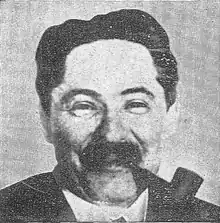 |
Dmitry Zakharovich Manuilsky | 14 December 1921 | 10 April 1923 | 6 | |
| (3) | |
Emanuil Ionovich Kviring | 10 April 1923 | 16 May 1924 | 7 | |
| 17 May 1924 | 7 April 1925 | Aleksei Medvedev | 8 | |||
| Ivan Klimenko | ||||||
| 8 | .jpg.webp) |
Lazar Moiseyevich Kaganovich | 7 April 1925 | 12 December 1925 | ||
| 12 December 1925 | 29 November 1927 | 9 | ||||
| Aleksei Medvedev | ||||||
| 29 November 1927 | 14 July 1928 | 10 | ||||
| (4) | |
Stanislav Vikentevich Kosior | 14 July 1928 | 15 June 1930 | ||
| Lavrentiy Kartvelishvili | ||||||
| 15 June 1930 | 23 January 1934 | 11 | ||||
| Vasiliy Stroganov | ||||||
| Mendel Khatayevich | ||||||
| Pavel Postyshev | ||||||
| 23 January 1934 | 3 June 1937 | 12 | ||||
| Mendel Khatayevich | ||||||
| 3 June 1937 | 27 January 1938 | 13 | ||||
| Sergei Kudryavtsev | ||||||
| 9 | _1937%252C_Bestanddeelnr_914-5777_(cropped).jpg.webp) |
Nikita Sergeyevich Khrushchev Acting until 18 June 1938 |
27 January 1938 | 17 May 1940 | Mikhail Burmistenko Acting until 18 June 1938 | |
| 14 | ||||||
| 17 May 1940 | 3 March 1947 | 15 | ||||
| Demian Korotchenko | ||||||
| (8) | |
Lazar Moiseyevich Kaganovich | 3 March 1947 | 26 December 1947 | ||
| (9) | |
Nikita Sergeyevich Khrushchev | 26 December 1947 | 28 January 1949 | Leonid Melnikov | |
| 28 January 1949 | 16 December 1949 | 16 | ||||
| 10 | Leonid Georgyevich Melnikov | 16 December 1949 | 27 September 1952 | Aleksei Kirichenko | ||
| 27 September 1952 | 4 June 1953 | 17 | ||||
| 11 |  |
Aleksey Illarionovich Kirichenko | 4 June 1953 | 26 March 1954 | Nikolai Podgorny | |
| 26 March 1954 | 21 January 1956 | 18 | ||||
| 21 January 1956 | 26 December 1957 | 19 | ||||
| 12 | _(1).jpg.webp) |
Nikolay Viktorovich Podgorny | 26 December 1957 | 19 February 1960 | Leontiy Naidek | |
| 19 February 1960 | 30 September 1961 | Ivan Kazanets | 20 | |||
| 30 September 1961 | 2 July 1963 | 21 | ||||
| 13 | Petro Yukhymovych Shelest | 2 July 1963 | 18 March 1966 | Nikolai Sobol | ||
| 18 March 1966 | 20 March 1971 | Oleksandr Liashko | 22 | |||
| Ivan Lutak | ||||||
| 20 March 1971 | 25 May 1972 | 23 | ||||
| 14 |  |
Vladimir Vasilyevich Shcherbitsky | 25 May 1972 | 13 February 1976 | ||
| 13 February 1976 | 12 February 1981 | Ivan Sokolov | 24 | |||
| 12 February 1981 | 8 February 1986 | 25 | ||||
| Oleksiy Titarenko | ||||||
| 8 February 1986 | 28 September 1989 | 26 | ||||
| Vladimir Ivashko | ||||||
| 15 | |
Vladimir Antonovich Ivashko | 28 September 1989 | 23 June 1990 | Stanislav Hurenko | 27 |
| 16 | Stanislav Ivanovich Hurenko | 23 June 1990 | 24 October 1990[35] | Leonid Kravchuk | 28 | |
| Hryhoriy Kharchenko | ||||||
Ukraine (1991–present)
On 5 July 1991, the Verkhovna Rada of the Ukrainian SSR passed a law establishing the post of the President of the Ukrainian SSR. The title was changed to the President of Ukraine upon the proclamation of independence (24 August 1991). The first election of the President of Ukraine was held on 1 December 1991.
Non-partisan, without support or independent People's Union "Our Ukraine" Party of Regions All-Ukrainian Union "Fatherland" Petro Poroshenko Bloc "Solidarity" Servant of the People
| № | Presidents of Ukraine | Elected | Took office | Left office | Party | |
|---|---|---|---|---|---|---|
| 1 | |
Leonid Kravchuk | 1991 | 5 December 1991 (Inaugurated on 22 August 1992)[c] |
19 July 1994 | Independent / Non-partisan |
| 2 |  |
Leonid Kuchma | 1994 | 19 July 1994 | 30 November 1999 | Independent / Non-partisan |
| 1999 | 30 November 1999 | 23 January 2005 | ||||
| 3 | .jpeg.webp) |
Viktor Yushchenko | 2004 | 23 January 2005 | 25 February 2010 | People's Union "Our Ukraine" |
| 4 | .jpg.webp) |
Viktor Yanukovych | 2010 | 25 February 2010 | 22 February 2014 | Party of Regions |
| — | .jpg.webp) |
Oleksandr Turchynov Acting President |
— | 23 February 2014 | 7 June 2014 | All-Ukrainian Union "Fatherland" |
| 5 |  |
Petro Poroshenko | 2014 | 7 June 2014 | 20 May 2019 | Petro Poroshenko Bloc "Solidarity" |
| 6 | _(cropped).jpg.webp) |
Volodymyr Zelenskyy | 2019 | 20 May 2019 | Incumbent | Servant of the People |
See also
References
- "Nordiska furstar lade grunden till Ryssland". historiskamedia.se.
- Suszko, Henryk (2003). Latopis hustyński. Opracowanie, przekład i komentarze. Slavica Wratislaviensia CXXIV. Wydawnictwo Uniwersytetu Wrocławskiego. ISBN 83-229-2412-7; Tolochko, Oleksiy (2010). The Hustyn' Chronicle. (Harvard Library of Early Ukrainian Literature: Texts). ISBN 978-1-932650-03-7
- "Riuryk of Novgorod". www.encyclopediaofukraine.com. Retrieved 27 June 2020.
- "Sveerne". www.fortidensjelling.dk.
- Олександр Палій (2015). Історія України: Посібник. Yuri Marchenko. p. 105. ISBN 978-617-684-099-2.
- Leszek Moczulski, Narodziny Międzymorza, p.475, Bellona SA, Warszawa 2007 ISBN 978-83-11-10826-4
- Vladimir Plougin: Russian Intelligence Services: The Early Years, 9th–11th Centuries, Algora Publ., 2000
- History of Ukraine-Rus': From prehistory to the eleventh century, Canadian Institute of Ukrainian Studies Press, 1997
- Also known as Jarisleif I. See Google books
- http://fmg.ac/Projects/MedLands/RUSSIA,%20Rurik.htm#SviatoslavIaroslavichdied1076B
- According to A. Nazarenko. It was thought not long ago that the first wife of Sviatopolk was Barbara Komnene, a supposed daughter of Alexios I Komnenos. However, the lack of tradition of such a name in the Byzantine Empire led to doubt. Today she may be considered fictional.
- Monomakh branch (Mstyslavychi) at Izbornik
- Л.Войтович КНЯЗІВСЬКІ ДИНАСТІЇ СХІДНОЇ ЄВРОПИ
- (in Russian). 1909 – via Wikisource.
- Charles Cawley (14 March 2009). "Russia, Rurikids – Grand Princes of Kiev, Princes of Chernigov, descendants of Sviatoslav II, Grand Prince of Kiev (fourth son of Iaroslav I)". Medieval Lands. Foundation of Medieval Genealogy. Retrieved 10 April 2009.
- Dimnik, Martin. The Dynasty of Chernigov – 1146–1246.
- The chroniclers neglect to reveal the identity of Yaroslav's wife, but the Lyubetskiy sinodik calls her Irene; Dimnik, Martin op. cit. 121.
- Basing their observations on the evidence of the Lay of Igor's Campaign, a number of historians have suggested that her name was Evfrosinia and that she may have been Igor's second wife; on the other hand, the chronicles neither give Yaroslavna's name nor suggest that she was Igor's second wife; Dimnik, Martin op. cit. 121.
- Cawley, Charles (14 March 2009), Russia, Rurikids – Rostislav Mikhailovich died 1263, Medieval Lands database, Foundation for Medieval Genealogy, retrieved 23 December 2016,
- Thurston, Herbert (ed.). Butler's Lives of the Saints – September.
- Some authors give Rurik II a two-year-reign (1210–1212), and attribute to Vsevolod the Red a second reign (1212–1215), which, in this case, would mean that Vsevolod died in 1215, and not in 1212.
- До половецкого плена; Соловьёв С. М. История России с дневнейших времён
- "История монголов Карпини. Электронная библиотека исторического факультета МГУ". www.hist.msu.ru.
- "Розділ 4.1. Леонтій Войтович. Князівські династії Східної Європи". izbornyk.org.ua.
- Kann, Robert A. (2010). A history of the Habsburg Empire, 1526–1918. University of California Press. ISBN 978-0-520-04206-3. OCLC 951424408.
The Habsburg policy in Galicia and Bukovyna to support the Uniate church and her educational institutions and to a lesser degree the Greek Orthodox Church for the benefit of the Ruthenian Ukrainian population cannot be classified simply as divide et impera" "the first and second generation of Ruthenian literary men under Habsburg rule served this ultimate goal of Ruthenian-Ukrainian nationalism
- Subtelny, Orest (2012). Ukraine a history. Univ. of Toronto Press. ISBN 978-1-4426-0991-4. OCLC 948518600.
the populace belong to the great Ruthenian [Ukrainian] nation, whose 15 million members, of whom 2.5 million live in Galicia, all speak the same language" (1848) "the Supreme Ruthenian Council, the first modern Ukrainian political organization" "they attempted to neutralize the Supreme Ruthenian Council by forming a rival Ukrainian organization that was pro-Polish.
- A history of Ukraine: the land and its peoples. 1 June 2011.
The Ruthenian club established the first permanent Ukrainian theatre anywhere and with cadres from Galicia and Dnieper Ukraine
- Wilson, Andrew, 1961- author. (15 October 2015). The Ukrainians : unexpected nation. ISBN 978-0-300-21965-4. OCLC 922581401.
the Ukrainians were known as 'Rusyns' or, in the English version Ruthenians
{{cite book}}:|last=has generic name (help)CS1 maint: multiple names: authors list (link) - Новосівський, Іван М. (1970). Bukovinian Ukrainians; a historical background and their self-determination in 1918. Association of Bukovinian Ukrainians. OCLC 151305.
Rumanized Ruthenian (Ukrainian) faith and customs
- "Ruthenians". www.encyclopediaofukraine.com. Retrieved 27 June 2020.
- Engel, Pál (2001). The Realm of St Stephen: A History of Medieval Hungary, 895–1526. I.B. Tauris Publishers. ISBN 1-86064-061-3.
- Font, Márta (1991). "II. András orosz politikája és hadjáratai [Andrew II's policy and campaigns in Rus']". Századok (in Hungarian). 125 (1–2): 107–144k. ISSN 0039-8098.
- Hollý, Karol (2007). "Princess Salomea and Hungarian–Polish Relations in the Period 1214–1241" (PDF). Historický Časopis. 55 (Supplement): 5–32. ISSN 0018-2575.
- March 28 - The meeting of the Ukrainian Central Council, first chaired by Mykhailo Hrushevsky
- On 24 October 1990, article 6 on the monopoly of the Communist Party of Ukraine on power was excluded from the Constitution of the Ukrainian SSR