List of governors of New Jersey
The governor of New Jersey is the head of government of New Jersey and the commander-in-chief of the state's military forces. The governor has a duty to enforce state laws and the power to either approve or veto bills passed by the New Jersey Legislature, to convene the legislature, and to grant pardons, except in cases of treason or impeachment.[1]
| Governor of New Jersey | |
|---|---|
 | |
| Style |
|
| Status | |
| Residence | Drumthwacket |
| Seat | Trenton, New Jersey |
| Term length | Four years, renewable once consecutively |
| Constituting instrument | New Jersey Constitution of 1776 |
| Precursor | Governor of New Jersey (Great Britain) |
| Inaugural holder | William Livingston |
| Formation | August 31, 1776 |
| Deputy | Lieutenant Governor of New Jersey |
| Website | state |
_(cropped)_(cropped).jpg.webp)
The first New Jersey State Constitution, ratified in 1776, provided that a governor be elected annually by the state legislature, the members of which were selected by the several counties.[2] Under this constitution, the governor was president of the upper house of the legislature, then called the Legislative Council.[2] The 1844 constitution provided for a popular vote to elect the governor,[3] who no longer presided over the upper house of the legislature, now called the Senate. The 1844 constitution also lengthened the governor's term to three years, set to start on the third Tuesday in January following an election, and barred governors from succeeding themselves.[4] The 1947 constitution extended terms to four years, and limits governors from being elected to more than two consecutive terms, though they can run again after a third term has passed.[5] Joseph Bloomfield, Peter Dumont Vroom, Daniel Haines, Joel Parker, Leon Abbett, and Walter Evans Edge each served two non-consecutive stints as governor while A. Harry Moore served three non-consecutive stints. Foster McGowan Voorhees, James Fairman Fielder, and Richard Codey each served two non-consecutive stints, one as acting governor and one as official governor.
The 1776 constitution provided that the vice-president of the Legislative Council would act as governor (who was president of the Council) should that office be vacant.[2] The 1844 constitution placed the president of the Senate first in the line of succession,[6] as did the subsequent 1947 constitution.[7] A constitutional amendment in 2006 created the office of lieutenant governor,[8] to be elected on the same ticket for the same term as the governor,[9] and if the office of governor is vacant, the lieutenant governor becomes governor.[10] This office was first filled in 2010.
There have been 55 official governors of New Jersey, 1 of whom was female, with several others acting as governor for a time.[lower-alpha 1] In the official numbering, governors are counted only once each, and traditionally, only elected governors were included. However, legislation signed on January 10, 2006, allowed acting governors who had served at least 180 days to be considered full governors. The law was retroactive to January 1, 2001; it therefore changed the titles of Donald DiFrancesco and Richard Codey, affecting Jim McGreevey's numbering.[11] The current governor is Phil Murphy, who took office on January 16, 2018.
Governors
New Jersey was one of the original Thirteen Colonies and was admitted as a state on December 18, 1787. Prior to declaring its independence, New Jersey was a colony of the Kingdom of Great Britain.
- Political party
Democratic (27) Democratic-Republican (3) Federalist (5) Republican (17) Whig (4)
| No. | Governor | Term in office | Previous positions[lower-alpha 2] | Party | Election | Lt. governor[lower-alpha 3] | |||
|---|---|---|---|---|---|---|---|---|---|
| 1 |  |
William Livingston | August 31, 1776 – July 25, 1790 |
Member of the New York General Assembly, Delegate to the Continental Congress | Federalist | 1776 | Office did not exist | ||
| 1777 | |||||||||
| 1778 | |||||||||
| 1779 | |||||||||
| 1780 | |||||||||
| 1781 | |||||||||
| 1782 | |||||||||
| 1783 | |||||||||
| 1784 | |||||||||
| 1785 | |||||||||
| 1786 | |||||||||
| 1787 | |||||||||
| 1788 | |||||||||
| 1789 [lower-alpha 4] | |||||||||
| — | Elisha Lawrence | July 25, 1790 – October 29, 1790[lower-alpha 5] |
Vice President of the Legislative Council | ||||||
| 2 |  |
William Paterson | October 29, 1790[lower-alpha 5] – March 30, 1793 |
State Attorney General, U.S. Senator | 1790 | ||||
| 1791 | |||||||||
| 1792 [lower-alpha 6] | |||||||||
| — | Thomas Henderson | March 30, 1793 – June 3, 1793 |
Vice President of the Legislative Council | ||||||
| 3 |  |
Richard Howell | June 3, 1793 – October 31, 1801 |
Clerk of the State Supreme Court | 1793 | ||||
| 1794 [lower-alpha 7] | |||||||||
| 1795 | |||||||||
| 1796 | |||||||||
| 1797 | |||||||||
| 1798 | |||||||||
| 1799 | |||||||||
| 1800 | |||||||||
| 4 |  |
Joseph Bloomfield | October 31, 1801 – October 28, 1802 |
Mayor of Burlington | Democratic- Republican |
1801 | |||
| — | 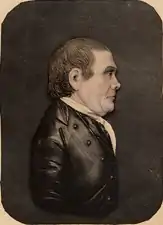 |
John Lambert | October 28, 1802 – October 29, 1803 |
Vice President of the Legislative Council | 1802 [lower-alpha 8] | ||||
| 4 | |
Joseph Bloomfield | October 29, 1803 – October 29, 1812 |
Governor | 1803 | ||||
| 1804 | |||||||||
| 1805 | |||||||||
| 1806 | |||||||||
| 1807 | |||||||||
| 1808 | |||||||||
| 1809 | |||||||||
| 1810 | |||||||||
| 1811 [lower-alpha 9] | |||||||||
| 5 |  |
Aaron Ogden | October 29, 1812 – October 29, 1813 |
U.S. Senator | Federalist | 1812 | |||
| 6 |  |
William Sanford Pennington | October 29, 1813 – June 19, 1815 |
U.S. Attorney, State Supreme Court Justice | Democratic- Republican |
1813 | |||
| 1814 [lower-alpha 10][lower-alpha 11] | |||||||||
| — | William Kennedy | June 19, 1815 – October 26, 1815 |
Vice President of the Legislative Council | ||||||
| 7 |  |
Mahlon Dickerson | October 26, 1815 – February 1, 1817 |
Attorney General of Pennsylvania | 1815 | ||||
| 1816 [lower-alpha 12] | |||||||||
| 8 |  |
Isaac Halstead Williamson | February 6, 1817 – October 30, 1829 |
Member of the Legislative Council | Federalist[lower-alpha 13] | ||||
| 1817 | |||||||||
| 1818 | |||||||||
| 1819 | |||||||||
| 1820 | |||||||||
| 1821 | |||||||||
| 1822 | |||||||||
| 1823 | |||||||||
| 1824 | |||||||||
| 1825 | |||||||||
| 1826 | |||||||||
| 1827 | |||||||||
| 1828 | |||||||||
| — |  |
Garret D. Wall | October 30
— November 6, 1829 |
Vice President of the Legislative Council | Democratic | 1829 [lower-alpha 14] | |||
| 9 |  |
Peter Dumont Vroom | November 6, 1829 – October 26, 1832 |
Assemblyman, Member of the Legislative Council | |||||
| 1830 | |||||||||
| 1831 | |||||||||
| 10 |  |
Samuel L. Southard | October 26, 1832 – February 27, 1833 |
U.S. Senator, U.S. Secretary of the Navy | Whig | 1832 [lower-alpha 15] | |||
| 11 |  |
Elias P. Seeley | February 27, 1833 – October 25, 1833 |
Member of the Legislative Council | |||||
| 9 | |
Peter Dumont Vroom | October 25, 1833 – November 3, 1836 |
Governor | Democratic | 1833 | |||
| 1834 | |||||||||
| 1835 | |||||||||
| 12 | .jpg.webp) |
Philemon Dickerson | November 3, 1836 – October 27, 1837 |
U.S. Representative | 1836 | ||||
| 13 |  |
William Pennington | October 27, 1837 – October 27, 1843 |
Member of the Legislative Council | Whig | 1837 | |||
| 1838 | |||||||||
| 1839 | |||||||||
| 1840 | |||||||||
| 1841 | |||||||||
| 1842 | |||||||||
| 14 | .tif.jpg.webp) |
Daniel Haines | October 27, 1843 – January 21, 1845 |
Member of the Legislative Council | Democratic | 1843 | |||
| 15 |  |
Charles C. Stratton | January 21, 1845 – January 18, 1848 |
U.S. Representative | Whig | 1844 [lower-alpha 16] | |||
| 14 | |
Daniel Haines | January 18, 1848 – January 21, 1851 |
Governor | Democratic | 1847 | |||
| 16 |  |
George Franklin Fort | January 21, 1851 – January 17, 1854 |
State Senator | 1850 | ||||
| 17 | .jpg.webp) |
Rodman M. Price | January 17, 1854 – January 20, 1857 |
U.S. Representative | 1853 | ||||
| 18 | .jpg.webp) |
William A. Newell | January 20, 1857 – January 17, 1860 |
U.S. Representative | Republican | 1856 | |||
| 19 |  |
Charles Smith Olden | January 17, 1860 – January 20, 1863 |
State Senator | 1859 | ||||
| 20 |  |
Joel Parker | January 20, 1863 – January 16, 1866 |
Assemblyman, Monmouth County Prosecutor | Democratic | 1862 | |||
| 21 | _circa_1860.jpg.webp) |
Marcus Lawrence Ward | January 16, 1866 – January 19, 1869 |
Chair of the Republican National Committee | Republican | 1865 | |||
| 22 |  |
Theodore Fitz Randolph | January 19, 1869 – January 16, 1872 |
State Senator | Democratic | 1868 | |||
| 20 | |
Joel Parker | January 16, 1872 – January 19, 1875 |
Governor | 1871 | ||||
| 23 |  |
Joseph D. Bedle | January 19, 1875 – January 15, 1878 |
State Supreme Court Justice | 1874 | ||||
| 24 |  |
George B. McClellan | January 15, 1878 – January 18, 1881 |
Commanding General of the U.S. Army | 1877 | ||||
| 25 |  |
George C. Ludlow | January 18, 1881 – January 15, 1884 |
State Senator, President of the State Senate | 1880 | ||||
| 26 |  |
Leon Abbett | January 15, 1884 – January 18, 1887 |
State Senator, Corporation Counsel of Jersey City | 1883 | ||||
| 27 |  |
Robert Stockton Green | January 18, 1887 – January 21, 1890 |
U.S. Representative | 1886 | ||||
| 26 | |
Leon Abbett | January 21, 1890 – January 17, 1893 |
State Senator, Governor | 1889 | ||||
| 28 |  |
George Theodore Werts | January 17, 1893 – January 21, 1896 |
Mayor of Morristown, State Senator, President of the State Senate | 1892 | ||||
| 29 |  |
John W. Griggs | January 21, 1896 – January 31, 1898 |
State Senator | Republican | 1895 [lower-alpha 17] | |||
| — |  |
Foster McGowan Voorhees | January 31, 1898 – October 18, 1898 |
President of the State Senate | |||||
| — |  |
David Ogden Watkins | October 18, 1898 – January 17, 1899 |
Speaker of the Assembly | |||||
| 30 | |
Foster McGowan Voorhees | January 17, 1899 – January 21, 1902 |
President of the State Senate and Acting Governor | 1898 [lower-alpha 18] | ||||
| 31 | .jpg.webp) |
Franklin Murphy | January 21, 1902 – January 17, 1905 |
Chair of the New Jersey Republican Party | 1901 [lower-alpha 19] | ||||
| 32 |  |
Edward C. Stokes | January 17, 1905 – January 21, 1908 |
State Senator | 1904 | ||||
| 33 |  |
John Franklin Fort | January 21, 1908 – January 17, 1911 |
State Supreme Court Justice | 1907 [lower-alpha 20] | ||||
| 34 |  |
Woodrow Wilson | January 17, 1911 – March 1, 1913 |
President of Princeton University | Democratic | 1910 [lower-alpha 21][lower-alpha 22] | |||
| — |  |
James Fairman Fielder | March 1, 1913 – October 28, 1913 |
President of the State Senate | |||||
| — |  |
Leon R. Taylor | October 28, 1913 – January 20, 1914 |
Speaker of the Assembly | |||||
| 35 | |
James Fairman Fielder | January 20, 1914 – January 16, 1917 |
President of the State Senate and Acting Governor | 1913 [lower-alpha 23][lower-alpha 24] | ||||
| 36 | 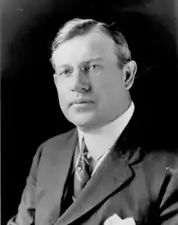 |
Walter Evans Edge | January 16, 1917 – May 16, 1919 |
State Senator | Republican | 1916 [lower-alpha 24][lower-alpha 25][lower-alpha 26] | |||
| — |  |
William Nelson Runyon | May 16, 1919 – January 13, 1920 |
President of the State Senate | |||||
| — |  |
Clarence E. Case | January 13, 1920 – January 20, 1920 |
President of the State Senate | |||||
| 37 |  |
Edward I. Edwards | January 20, 1920 – January 15, 1923 |
State Senator | Democratic | 1919 | |||
| 38 |  |
George Sebastian Silzer | January 15, 1923 – January 19, 1926 |
State Senator, Superior Court Judge | 1922 | ||||
| 39 |  |
A. Harry Moore | January 19, 1926 – January 15, 1929 |
Member of the Jersey City Commission | 1925 | ||||
| 40 | .jpg.webp) |
Morgan Foster Larson | January 15, 1929 – January 19, 1932 |
State Senator | Republican | 1928 | |||
| 39 | |
A. Harry Moore | January 19, 1932 – January 3, 1935 |
Governor | Democratic | 1931 [lower-alpha 27] | |||
| — | Clifford Ross Powell | January 3, 1935 – January 8, 1935 |
President of the State Senate | Republican | |||||
| — | Horace Griggs Prall | January 8, 1935 – January 15, 1935 |
President of the State Senate | ||||||
| 41 | .jpg.webp) |
Harold G. Hoffman | January 15, 1935 – January 18, 1938 |
U.S. Representative | 1934 | ||||
| 39 | .jpg.webp) |
A. Harry Moore | January 18, 1938 – January 21, 1941 |
Governor, U.S. Senator | Democratic | 1937 | |||
| 42 |  |
Charles Edison | January 21, 1941 – January 18, 1944 |
U.S. Secretary of the Navy | 1940 | ||||
| 36 | |
Walter Evans Edge | January 18, 1944 – January 21, 1947 |
Governor, U.S. Senator, U.S. Ambassador to France | Republican | 1943 | |||
| 43 | .jpg.webp) |
Alfred E. Driscoll | January 21, 1947 – January 19, 1954 |
State Senator | 1946 | ||||
| 1949 [lower-alpha 28] | |||||||||
| 44 | .jpg.webp) |
Robert B. Meyner | January 19, 1954 – January 16, 1962 |
State Senator | Democratic | 1953 | |||
| 1957 | |||||||||
| 45 | .jpg.webp) |
Richard J. Hughes | January 16, 1962 – January 20, 1970 |
Superior Court Judge | 1961 | ||||
| 1965 | |||||||||
| 46 |  |
William T. Cahill | January 20, 1970 – January 15, 1974 |
Assemblyman, U.S. Representative | Republican | 1969 | |||
| 47 | .png.webp) |
Brendan Byrne | January 15, 1974 – January 19, 1982 |
Essex County Prosecutor, President of Board of Public Utilities, Superior Court Judge | Democratic | 1973 | |||
| 1977 | |||||||||
| 48 | .png.webp) |
Thomas Kean | January 19, 1982 – January 16, 1990 |
Speaker of the Assembly | Republican | 1981 | |||
| 1985 | |||||||||
| 49 | .jpg.webp) |
James Florio | January 16, 1990 – January 18, 1994 |
New Jersey State Assemblyman, United States Representative | Democratic | 1989 | |||
| 50 |  |
Christine Todd Whitman | January 18, 1994 – January 31, 2001 |
Somerset County Freeholder, President of the New Jersey Board of Public Utilities | Republican | 1993 | |||
| 1997 [lower-alpha 29] | |||||||||
| 51 | .jpg.webp) |
Donald DiFrancesco | January 31, 2001 – January 8, 2002 |
President of the State Senate | |||||
| — |  |
John Farmer Jr. | January 8, 2002 – January 8, 2002 |
Attorney General of New Jersey | |||||
| — | John O. Bennett | January 8, 2002 – January 12, 2002 |
President of the State Senate | ||||||
| — | .jpg.webp) |
Richard Codey | January 12, 2002 – January 15, 2002 |
State Senator | Democratic | ||||
| 52 | .jpg.webp) |
Jim McGreevey | January 15, 2002 – November 15, 2004 |
Assemblyman, Mayor of Woodbridge Township, State Senator | 2001 [lower-alpha 30] | ||||
| 53 | |
Richard Codey | November 15, 2004 – January 17, 2006 |
President of the State Senate | |||||
| 54 | .jpg.webp) |
Jon Corzine | January 17, 2006 – January 19, 2010 |
United States Senator | 2005 [lower-alpha 31] | ||||
| 55 | .jpg.webp) |
Chris Christie | January 19, 2010 – January 16, 2018 |
Morris County Freeholder, U.S. Attorney for the District of New Jersey | Republican | 2009 | Kim Guadagno | ||
| 2013 | |||||||||
| 56 | _(1).jpg.webp) |
Phil Murphy | January 16, 2018 – Incumbent[lower-alpha 32] |
U.S. Ambassador to Germany | Democratic | 2017 | Sheila Oliver | ||
| 2021 | |||||||||
Succession
Prior to 2010, unlike most other states, New Jersey did not have the office of lieutenant governor. Until 2010, when the office of governor was vacant or the governor was unable to fulfill his/her duties through injury, the president of the State Senate served as the acting governor. The Senate president continued in the legislative role during his/her tenure as the state's acting chief executive, thus giving the person control over executive and legislative authority. The acting governor served either until a special election was held (which would occur if the governor died, resigned, or was removed from office with more than 16 months before the end of the term), until the governor recovered from his/her injuries, or, if the governor died, resigned, or was removed from office less than 16 months before end of the term, until the end of the term.
Following the resignation of Christine Todd Whitman in 2001 to become EPA Administrator, Donald DiFrancesco assumed the acting governor's post. Following Whitman's resignation and DiFrancesco's departure, John O. Bennett served as acting governor for three and a half days. During that time, he signed a few bills into law, gave a State of the State Address, and held parties at Drumthwacket, the New Jersey governor's mansion. Similarly, Richard J. Codey served as acting governor as well. Because control of the New Jersey State Senate was split, resulting in two Senate co-presidents, Codey and Bennett, each held the office of acting governor for three days. For a second time, Richard Codey served as acting governor of New Jersey until January 2006, following the resignation of Jim McGreevey in late 2004. Perhaps the spectacle of having six changes in the governorship in a four-year span, in as much as any other factor, led to the voters' decision to amend the state constitution in 2005 to create the office of lieutenant governor of New Jersey effective with the 2009 state elections.
Notes
- Only acting governors who filled a vacant office are included in the list. People who acted as governor for a period when the governor was out of state or unable to serve for a period are noted with their governor. It is possible other people acted as governor for short periods but were not recorded.
- Note that until 1844, all Governors were simultaneously members of the Legislative Council, as the position was synonymous with that of President of the Council.
- The office of lieutenant governor was created in 2006 and was first filled in 2010.
- Livingston died in office; as vice-president of the Legislative Council, Lawrence acted as governor for the remainder of the term.
- The National Governors Association states Paterson took office on October 30; however, older books specify that he took office on October 29.[12]
- Paterson resigned to be an associate justice of the Supreme Court of the United States; as vice-president of the Legislative Council, Henderson acted as governor for the remainder of the term.
- Howell was in Pennsylvania in command of the New Jersey militia during the Whiskey Rebellion; during his absence, Thomas Henderson, as vice-president of the Legislative Council, acted as governor from September 20 to December 25, 1794.[13]
- The 1802 election was deadlocked, with the legislature unable to pick a candidate, giving up on November 25, 1802. Lambert, as vice-president of the Legislative Council, acted as governor until the next election.[14]
- Bloomfield was in New York in command of Military District 3 during the War of 1812; during his absence, Charles Clark, as vice-president of the Legislative Council, acted as governor from June 1 to October 29, 1812, when Bloomfield's term ended.[15]
- Pennington resigned to be a federal judge in the District of New Jersey; as vice-president of the Legislative Council, Kennedy acted as governor for the remainder of the term.
- All official listings omit Kennedy, who acted as governor for four months.[16]
- Dickerson resigned to take an elected seat in the United States Senate; Williamson was elected by the legislature to succeed him.[17] No source mentions anyone acting as governor between Dickerson's resignation and Williamson's election; the vice-president of the Legislative Council at the time was Jesse Upson, so he likely acted as governor.[18]
- Williamson was known to be a Federalist; though the Federalist Party ceased existing around 1820, no sources say Williamson changed his party affiliation, perhaps choosing to remain loyal to the Federalist ideals.[19] One source describes him as an "ex-Federalist" before he was even elected.[20] A contemporary source says he remained in office until the "Jackson party" controlled the legislature; as this is a reference to the Democratic-Republican Party, it can be assumed Williamson did not switch to that party.[21]
- Wall was elected on October 30, 1829; however, he declined the post, effective November 6, 1829.[22] Vroom was then elected by the legislature to replace him.
- Southard resigned to take an elected seat in the United States Senate; Seeley was vice-president of the Legislative Council at the time, but he was elected governor rather than simply acting in the post for the rest of the term.[23]
- The constitution increased term lengths from one to three years beginning with this term.[4]
- Griggs resigned to be United States Attorney General. As president of the senate, Voorhees acted as governor until he resigned from the senate; he had been nominated for governor for the 1898 election, but the constitution prohibited governors from succeeding themselves, so he resigned to run, winning the race.[24]
- Voorhees was out of the country in Europe for several weeks in 1900; William M. Johnson, as president of the Senate, formally acted as governor from May 21 to June 19.[25][26][27]
- Murphy was out of the state twice in 1904; Edmund W. Wakelee, as president of the Senate, formally acted as governor twice, and according to page 284 the 1905 Manual of the Legislature, served from April 25 to June 5, when Murphy was in Europe, and from June 14 to June 27, when Murphy was visiting Chicago and St. Louis.[28] However, page 16 of the same book states that he served from April 25 to June 5, and June 15 to June 27.[25] He actually took the oaths of office on April 26 and June 14.[27]
- Fort was out of the state for some time in 1909; Joseph Sherman Frelinghuysen, Sr., as president of the Senate, acted as governor for an unknown period.[29]
- Wilson resigned to be President of the United States. As president of the senate, Fielder acted as governor until he resigned from the senate; he had been nominated for governor for the 1913 election, but the constitution prohibited governors from succeeding themselves, so he resigned to run, winning the race.[30] This left Taylor, as speaker of the house of representatives, acting as governor for the remainder of the term.
- Wilson was out of the state for multiple periods during his administration.[26] Documented episodes include from May 3 to June 3, 1911, during which time Ernest R. Ackerman, as president of the Senate, acted as governor,[31][32] though another source states he took the oath on May 4.[33] Ackerman also acted as governor from October 25, 1911, for about a week, and again for about a week in mid-November, 1911.[34] John Dyneley Prince became president of the Senate in 1912, and is known to have acted as governor on at least 11 different occasions.[34]
- Fielder was out of the state for a time in June 1914; John W. Slocum, as president of the Senate, acted as governor for an unknown period.[35] Walter Evans Edge later became president of the Senate, and acted as governor for five weeks in 1915.[36] Later again, George W. F. Gaunt became president of the Senate and acted as governor, though only two days are specifically known: September 19, 1916 and October 9, 1916.[37]
- One source states that George W. F. Gaunt, as president of the Senate, acted as governor in 1917, but it is unknown if he was acting in place of James Fairman Fielder or Walter Evans Edge.[26]
- Edge resigned to take an elected seat in the United States Senate; as president of the senate, Runyon acted as governor until his senate term ended, then Case acted as governor for the remainder of the term.
- Edge was out of the state for a time in 1918; Thomas F. McCran, as president of the Senate, is known to have acted as governor, but for an unknown period.[26]
- Moore resigned to take an elected seat in the United States Senate. As president of the senate, Powell acted as governor until his senate term expired, at which point Prall, as the new president of the senate, acted as governor for the remainder of the term.
- This was the first term under the 1947 constitution, which increased term lengths to four years.[5]
- Whitman resigned to be Administrator of the Environmental Protection Agency. As president of the senate, DiFrancesco acted as governor until his senate term expired. However, a 2006 law considers anyone who has acted as governor longer than 180 days to be considered a full governor, retroactive to January 1, 2001, and as such, DiFrancesco is considered to have fully succeeded to the post. However, there were 90 minutes between the end of the senate term and the beginning of the next one; during this time, Attorney General Farmer acted as governor.[38] The new state senate was evenly split between Republicans and Democrats.[39] The compromise to pick a senate president – and therefore, an acting governor – was to have John Bennett, a Republican, act as governor from 1:30pm January 8 to 12:01am January 12, and Democrat Richard Codey would then act from 12:01am January 12 to noon on January 15, at which point the elected governor took office.[40]
- McGreevey resigned due to a sex scandal. As president of the senate, Codey acted as governor until his senate term expired. However, a 2006 law considers anyone who has acted as governor longer than 180 days to be considered a full governor, retroactive to January 1, 2001, and as such, Codey is considered to have fully succeeded to the post.
- Corzine was severely injured in a car accident on April 12, 2007; Richard Codey, as president of the Senate, acted as governor until May 7, 2007.[41] Corzine also left the country in 2010 for a vacation to Switzerland; Stephen M. Sweeney, as president of the Senate, acted as governor from January 14 to around January 17.[42]
- Murphy's second term will expire on January 20, 2026; He will be term limited.
References
- General
- Biographies of New Jersey Governors, New Jersey State Library
- "Governors of New Jersey". National Governors Association. Archived from the original on February 10, 2007. Retrieved January 12, 2010.
- Lundy, F.L.; et al. (1905). Manual of the Legislature of New Jersey, One Hundred and Twenty-Ninth Session. Trenton, New Jersey: J. L. Murphy Publishing Company. Retrieved January 19, 2010.
- Lundy, F.L.; et al. (1921). Manual of the Legislature of New Jersey, One Hundred and Forty-Fifth Session. Trenton, New Jersey: State Gazette Publishing Company. Retrieved January 19, 2010.
- Lee, Francis Bazley (1902). New Jersey as a Colony and a State. New York City: The Publishing Society of New Jersey. ISBN 1-146-76658-0. Retrieved January 14, 2010.
- Kerney, James (1926). The Political Education of Woodrow Wilson. ISBN 9780598526144. Retrieved January 19, 2010.
- Report of the Adjutant-General of the State of New Jersey for the year ending October 31st, 1906. Somerville, New Jersey: The Union-Gazette Printing House. 1907. pp. 122–131. Retrieved January 14, 2010.
- Constitutions
- "Constitution of the State of New Jersey, as amended". New Jersey Legislature. 1947. Archived from the original on June 30, 2009. Retrieved January 13, 2010.
- "Constitution of the State of New Jersey". New Jersey Department of State. 1947. Archived from the original on September 21, 2010. Retrieved January 14, 2010.
- "Constitution of the State of New Jersey". New Jersey Department of State. 1844. Archived from the original on September 21, 2010. Retrieved January 13, 2010.
- "Constitution of the State of New Jersey". New Jersey Department of State. 1776. Archived from the original on June 16, 2009. Retrieved January 13, 2010.
- Specific
- NJ Constitution article V
- 1776 Constitution article 7
- 1844 Constitution article V, § 2
- 1844 Constitution article V, § 3
- NJ Constitution article V, § 1, cl. 5
- 1844 Constitution article V, § 12
- NJ Constitution article V, § 1, cl. 6, original
- NJ Constitution article XI, § 7
- NJ Constitution article V, § 1, cl. 4
- NJ Constitution article V, § 1, cl. 6, as amended
- New Jersey Legislature. P.L.2005, c. 282.: Provides title of person who serves as Acting Governor for continuous period of at least 180 days will be "Governor of the State of New Jersey" for official and historical purposes. Approved January 9, 2006, retroactive to January 1, 2001. Accessed January 6, 2008.
- Report p. 122
- Report p. 123
- Lee pp. 155–156
- Report p. 124
- Report pp. 125–126
- Lee pp. 160–161
- Lundy et al. (1921) p. 127
- Whitehead, John (1897). The Civil and Judicial History of New Jersey, Volume I. The Boston History Company. p. 361. Retrieved January 15, 2010.
- Birkner, Michael (1984). Samuel L. Southard: Jeffersonian Whig. p. 39. ISBN 978-0-8386-3160-7. Retrieved January 15, 2010.
- Elmer, Lucius Quintus Cincinnatus (1872). Collections of the New Jersey Historical Society, Volume VII. p. 175. Retrieved January 15, 2010.
- Lee pp. 377–378
- "Elias Pettit Seeley" (PDF). New Jersey State Library. Archived from the original (PDF) on June 20, 2007. Retrieved January 14, 2010.
- "Foster McGowan Voorhees" (PDF). New Jersey State Library. Archived from the original (PDF) on June 20, 2007. Retrieved January 14, 2010. This left Watkins, as speaker of the house of representatives, acting as governor for the remainder of the term.
- Lundy et al. (1905) p. 16
- Lundy et al. (1921) p. 22
- "Governor's Oaths". New Jersey Department of State. Archived from the original on January 15, 2009. Retrieved January 19, 2010.
- Lundy et al. (1905) p. 284
- Lundy et al. (1921) p. 252
- "James Fairman Fielder" (PDF). New Jersey State Library. Archived from the original (PDF) on June 20, 2007. Retrieved January 14, 2010.
- Documents of the One Hundred and Thirty-Sixth Legislature of the State of New Jersey and the Sixty-Eighth Under the New Constitution. Vol. I. Trenton, New Jersey: State Gazette Publishing Company. 1912. p. 475. Retrieved January 19, 2010.
- Lundy et al. (1921) p. 262
- Kerney p. 140
- Kerney p. 141
- Lundy et al. (1921) p. 361
- Congress, United States (1920). Official Congressional Directory, 2nd Edition, February 1920. p. 64. Retrieved January 19, 2010.
- Jersey, New (1916). Acts of the Legislature of the State of New Jersey. pp. 1009–1010. Retrieved January 19, 2010.
- David Kocieniewski (January 8, 2002). "Newark Stadium Bill Dies in Final Session". The New York Times. Retrieved January 14, 2010.
During the 90 minutes between Mr. DiFrancesco's departure and Mr. Bennett's swearing in, Attorney General John J. Farmer Jr. will formally hold the title of acting governor.
- David Kocieniewski (January 12, 2002). "The Hours of Power of an Acting Governor: Deconstructing Bennett's 3-Day Legacy". The New York Times. Retrieved January 22, 2010.
- "New Jersey Governor John O. Bennett". National Governors Association. Archived from the original on September 27, 2007. Retrieved January 22, 2010.
- David W. Chen (May 6, 2007). "Corzine to Resume Duties as Governor on Monday". The New York Times. Retrieved January 15, 2010.
- "New Jersey's New Senate President Fills in for Corzine". WNYC. January 15, 2010. Retrieved January 21, 2010.
External links

| Proprietary Province |  | |
|---|---|---|
| East New Jersey | ||
| West New Jersey | ||
| Dominion of New England (1688–89) | ||
| Royal governors |
| |
| State (since 1776) |
| |